 EN
EN
Dental Clinic Equipment Checklist for a New Practice
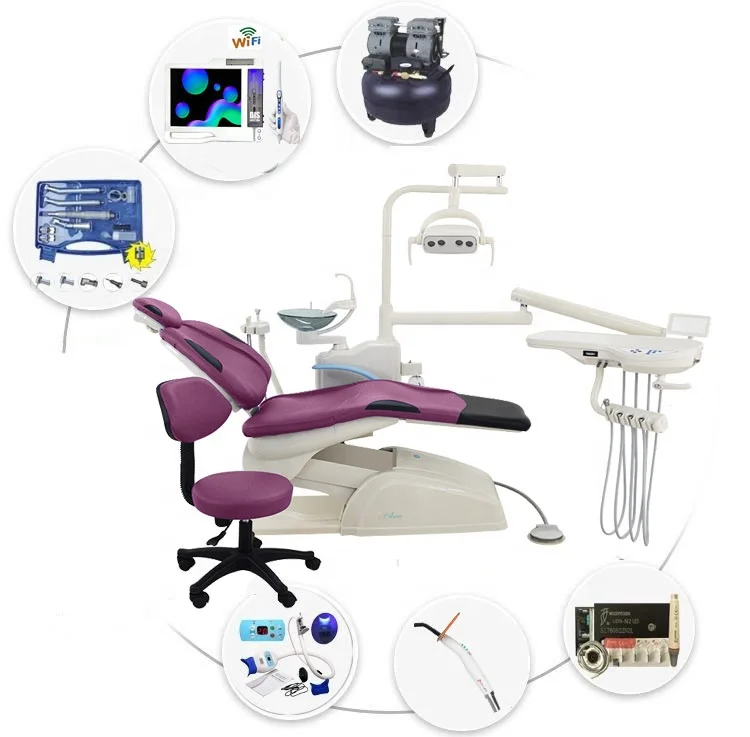
When a dentist opens a new practice, they usually buy the chair first and then discover the rest in instalments — which is expensive for them and awkward for you, because each forgotten item arrives as a separate small order with separate freight. A complete list quoted up front wins the project and ships in one container.
This checklist covers a standard one- to two-surgery general practice. It is organised by room, because that is how a clinic actually gets commissioned, and it flags the items that are most often left out of first quotations.
Room 1: the treatment surgery (per chair)
This is the core of the project and typically 55–70% of the equipment budget.
| Item | Qty per surgery | Notes |
|---|---|---|
| Dental chair / unit, complete | 1 | Includes delivery system, operating light, spittoon, suction circuit |
| Dentist's stool | 1 | Often omitted from chair packages — confirm |
| Assistant's stool | 1 | Different height range from the dentist's stool |
| High-speed handpiece (turbine) | 3–4 | You need enough to sterilise between patients, not one |
| Low-speed handpiece / contra-angle set | 2 | |
| Triple (three-way) syringe | 1–2 | Usually integrated, plus one spare tip set |
| Ultrasonic scaler | 1 | Built-in or standalone; specify tip set |
| Curing light | 1 | Cordless preferred; specify spare battery |
| Intraoral camera and monitor | 1 | Strong patient-acceptance tool, easy upsell |
| Amalgamator | 1 | Where amalgam is still in use |
| Instrument cabinet / mobile cart | 1 | |
| Wall-mounted X-ray unit or portable X-ray | 1 | See the imaging section below |
The handpiece quantity is the single most common under-specification. A clinic seeing twenty patients a day cannot run on one turbine: handpieces must be cleaned, lubricated and autoclaved between patients, and an autoclave cycle takes time. Three to four per surgery is the working minimum, and it is far easier to sell that at the project stage than to explain it three weeks after opening.
Room 2: sterilisation and instrument processing
This room is regulated in most markets and inspected in many. It is also the room most often under-equipped in a first quote.
- Autoclave (Class B preferred). Size to the practice: an 18 L unit suits one surgery, 23 L or larger for two or more. Class B handles hollow and wrapped loads, which is what handpieces need.
- Ultrasonic cleaner. Instruments must be cleaned before they are sterilised. A 3–6 L tank is typical.
- Sealing machine and sterilisation pouches. Consumable, recurring, and a good ongoing revenue line.
- Handpiece lubrication / maintenance unit. Extends handpiece life dramatically; pays for itself within months.
- Distilled or RO water source. Autoclaves require it; tap water destroys them.
- Stainless steel work surface with dirty-to-clean flow, and a dedicated sink.
- Instrument trays, cassettes and tubs.
- Sharps containers and clinical waste bins.
Room 3: imaging
How much to include depends on the market's radiation licensing rules and on whether the clinic intends to do endodontics from day one.
- Intraoral X-ray unit — wall-mounted or mobile. Wall-mounted is more stable and preferred by inspectors; portable handheld units are popular where space is tight or where the clinic does outreach.
- Sensor or imaging plate system — a digital sensor (size 1 and size 2) plus software, or a phosphor plate scanner. Confirm the sensor is compatible with the X-ray unit's exposure times.
- Lead apron and thyroid collar — usually mandatory, frequently forgotten.
- Radiation warning signage and, depending on local rules, a lead-lined partition or door.
- Panoramic or CBCT unit — a phase-two purchase for most new single-chair clinics, but worth quoting as an option so the dentist plans the room for it.
One practical note for dealers: in many markets the X-ray unit needs its own registration or licence with a radiation authority, separate from the device registration for the chair. Check the timeline for that licence early, because it is often the item that delays a clinic opening.
Room 4: plant and utilities
The equipment nobody sees, and the equipment that stops the clinic when it fails.
- Oil-free dental air compressor — sized to chair count, with an air dryer in humid climates. A shared compressor for two chairs must be genuinely rated for two, not simply the next model up.
- Suction pump — wet-ring or dry, matched to the chair's suction circuit. Confirm this before the chair ships.
- Amalgam separator — mandatory in an increasing number of markets where amalgam is used.
- Water treatment / waterline disinfection — a bottle system or an in-line dosing system; dental unit waterline contamination is a growing inspection point.
- Voltage stabiliser or UPS — in markets with unstable mains, this protects the chair's control board, the autoclave and the imaging computer. Far cheaper than replacing any of them.
- Backup power — a generator or inverter where grid supply is intermittent. Size it for the compressor's starting current, which is much higher than its running current.
Room 5: reception, admin and the rest of the building
- Reception desk, computer, practice-management software and printer
- Patient waiting seating
- Staff lockers and changing space
- Hand-hygiene stations at the surgery entrance
- Fire extinguisher (CO2 near electrical equipment) and first-aid kit
- Emergency drug kit and, in many jurisdictions, an oxygen cylinder with mask
Consumables for the first three months
Quoting an opening consumables package does two things: it gets the clinic open without a scramble, and it starts the repeat-order relationship that is worth far more to a dealer than the one-off equipment margin.
- Gloves, masks, gowns, bibs and barrier film
- Sterilisation pouches and indicator strips
- Suction tips, saliva ejectors and cups
- Burs — diamond and carbide, assorted
- Restorative materials: composite, bonding agent, etchant, glass ionomer
- Impression material and trays
- Local anaesthetic, needles and syringes
- Endodontic files, irrigants and paper points
- Surface and instrument disinfectants
- Distilled water for the autoclave
The nine items new clinics most often forget
If you take one thing from this page, take this list. Every one of these appears in follow-up orders weeks after opening, at retail prices and with express freight:
- The assistant's stool
- Enough handpieces to cover the autoclave cycle
- An ultrasonic cleaner (buying the autoclave alone is not enough)
- Distilled water supply for the autoclave
- The air dryer on the compressor
- A voltage stabiliser for the chair and imaging computer
- Lead aprons and radiation signage
- Amalgam separator, where required
- A spare-parts kit — control board, valves, tubing, cushion set
Budget planning: how the money usually splits
As a rough planning guide for a single-surgery general practice, the equipment budget tends to distribute roughly as follows. Local pricing, duties and installation costs shift these figures, so treat them as proportions rather than absolutes.
| Category | Approximate share of equipment budget |
|---|---|
| Dental chair / unit and delivery system | 40–50% |
| Imaging (intraoral X-ray and sensor) | 12–18% |
| Sterilisation room | 10–15% |
| Compressor, suction and plant | 10–15% |
| Small equipment and handpieces | 8–12% |
| Furniture, reception and IT | 5–10% |
Two costs sit outside this table and are routinely underestimated: civil works (plumbing, drainage, electrical runs, lead lining) and the registration and licensing timeline for both the clinic and the imaging equipment. Neither is equipment, but both decide when the clinic opens.
Quoting a full clinic package
VOTEN Medical supplies complete clinic packages from Foshan, China — chair, compressor, suction, sterilisation and small equipment in one consolidated shipment, with one packing list and one set of export documents. For dealers, that means a single quotation, one container load plan, and no forgotten items arriving by air freight a month later.
Send us the number of surgeries, the market and the voltage, and we will build the package list and packing data for you. See the range on our products pages, or request a clinic package quotation.