
The Philippines is one of the steadier dental equipment markets in Southeast Asia. New dentists enter practice every year — the Professional Regulation Commission licensed more than 2,000 new dentists in the November 2025 and May 2026 board examinations alone — and most of the chairs, compressors and autoclaves they open with are imported.
Importing into the Philippines is not complicated, but it runs on two separate tracks that have to be ready at the same time: authorisation from the Food and Drug Administration (FDA) and clearance through the Bureau of Customs (BOC). This guide explains both, and lists what you should ask your overseas factory to prepare.
Regulations, fees and tariff rates change. Treat this as a planning framework and confirm current requirements with the FDA, your licensed customs broker or a regulatory consultant before you commit to a shipment.
Track one: FDA authorisation
Medical devices in the Philippines are regulated by the FDA's Center for Device Regulation, Radiation Health and Research (CDRRHR). The current framework is Administrative Order 2018-0002, implemented through FDA Circular 2020-001, which aligns the Philippines with the ASEAN Medical Device Directive: devices are grouped into four risk classes, A (lowest) to D (highest).
Step 1: a License to Operate for the importer
Before any product can be notified or registered, the company that imports, distributes or wholesales medical devices needs an FDA License to Operate (LTO). The LTO belongs to the Philippine company, not to the overseas factory, and the product authorisations are held under it. This is the point that surprises first-time buyers: a foreign manufacturer cannot hold a Philippine device authorisation on its own — it works through a local LTO holder, usually its distributor.
Step 2: notification or registration of each product
- Class A devices receive a Certificate of Medical Device Notification (CMDN).
- Class B, C and D devices receive a Certificate of Medical Device Registration (CMDR), which requires a fuller technical dossier in the ASEAN Common Submission Dossier Template (CSDT) format.
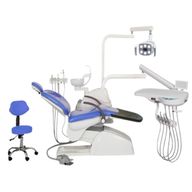
Both certificates are issued for a period of years and then renewed. Which class a product falls into depends on the ASEAN risk rules and the FDA's published reference lists, not on how the seller describes it. A complete dental unit — chair, delivery system with handpieces, light and spittoon — is an active device and should not be assumed to be Class A; a doctor's stool or a simple accessory may be. Confirm the class of each model with the FDA or your regulatory consultant before you quote a delivery date, because a CMDR takes considerably longer than a CMDN.
The documents the FDA expects from the manufacturer
Your application is only as fast as the factory's paperwork. For each model, expect to need:
- A letter of authorisation from the manufacturer naming your company as its Philippine importer or distributor. Both China and the Philippines are parties to the Apostille Convention, so a Chinese document can be apostilled rather than consularised.
- The manufacturer's ISO 13485 quality system certificate.
- Evidence of approval in other markets, such as the CE certificate and a Free Sale Certificate, covering the exact model numbers you are importing.
- A Declaration of Conformity and, for Class B–D devices, the technical information needed for the CSDT: description and specifications, design and manufacturing information, risk analysis, and test reports.
- Labels and instructions for use in English, matching the model names on the certificates.
The single most common delay is a mismatch: the model name on the CE certificate, the label, the invoice and the application are not identical. Agree the exact model designations with the factory before any document is produced.
Track two: customs clearance
Importer accreditation
The importer of record must be registered with the Bureau of Customs through its client profile registration, and should work with a licensed customs broker who lodges the import entry.
HS classification
Classification decides the duty rate, so settle it early. A complete dental unit with its delivery system is usually classified under heading 90.18 (medical and dental instruments and appliances); a patient chair on its own falls under 9402.10 (dentists' chairs). Compressors, autoclaves and small equipment each have their own codes. Ask your broker to confirm the code for each line on the proforma invoice, and make sure the factory's invoice and packing list use the same descriptions.
Duty, Form E and VAT
- Customs duty on medical equipment is generally low under the Philippines' most-favoured-nation tariff. Look up the rate for your exact code in the Tariff Commission's Tariff Finder.
- Goods of Chinese origin can qualify for the ASEAN–China Free Trade Area (ACFTA) preferential rate, which for many lines is zero. To claim it, the shipment needs a Certificate of Origin Form E, issued in China for that shipment. Ask the factory to arrange Form E before the goods sail — it is far harder to fix afterwards.
- VAT of 12% is charged on the landed value, which includes the customs value, duty and clearance charges.
- Smaller fixed charges — the import processing charge and documentary stamps — are added to each entry.
The clearance sequence, in order
- Importer holds a valid FDA LTO and BOC client profile registration.
- CMDN or CMDR issued for each model you will sell.
- Proforma invoice agreed: model names, HS codes, voltage and frequency, packing.
- Factory ships with commercial invoice, packing list, bill of lading and Form E.
- Broker lodges the import entry; duty and VAT are assessed and paid.
- Goods released and delivered to your warehouse or the clinic.
Transit from South China to Manila is short — typically under two weeks port to port — so the paperwork, not the voyage, is usually what decides your delivery date.
What to ask your factory for — a supplier checklist
- Apostilled letter of authorisation naming your company.
- ISO 13485, CE and Free Sale certificates that list the exact model numbers you are importing.
- Technical file and test reports in English, organised for the CSDT if the product is Class B or above.
- English labels and instructions for use that match the certificates word for word.
- 220–230V / 60Hz supply for the Philippine grid, confirmed on the proforma invoice — Philippine mains runs at 60Hz, not the 50Hz common in China and Europe.
- Certificate of Origin Form E for every shipment.
- A spare-parts kit with the first order — control board, solenoid valves, tubing, upholstery — so a clinic is not left waiting on air freight.
Practical notes from the market
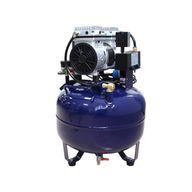
- Humidity. Specify an air dryer on the compressor. Moisture in the air line is the most common cause of early handpiece failure in tropical climates; our compressor sizing guide explains how to match compressor and chair.
- Power quality. Fit a voltage regulator on every chair, and brief clinics on what to do during brownouts. Control boards are the part most often damaged by unstable supply.
- Islands and logistics. If you sell outside Metro Manila, plan how technicians and spare parts reach Cebu, Davao and the provinces before you promise installation times.
- Choosing the model. Our dental chair buying guide and clinic equipment checklist cover what to specify for a new clinic.
Working with VOTEN on Philippine orders
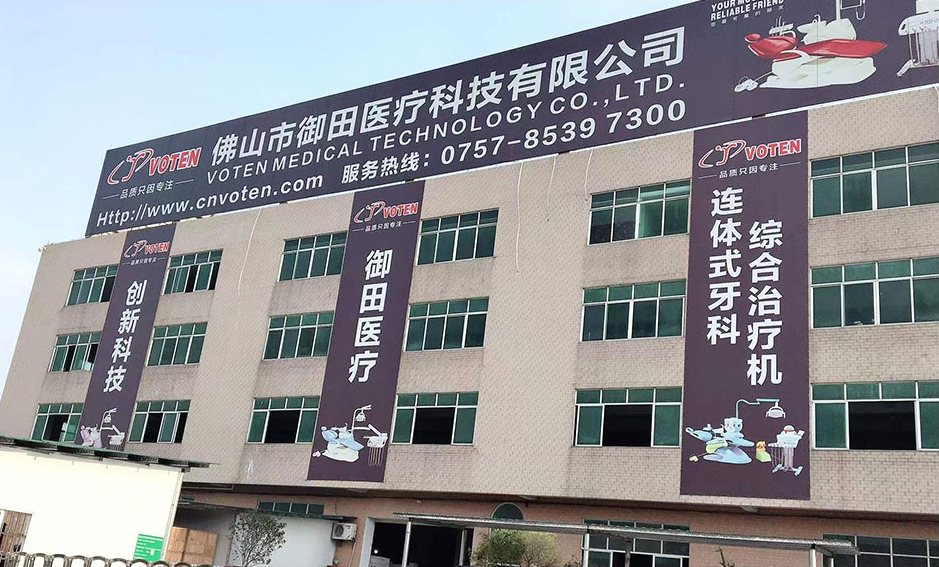
VOTEN Medical manufactures dental chairs and dental units, compressors and suction, autoclaves and clinic equipment in Foshan, China. For Philippine orders we prepare the document set described above — authorisation letter, ISO 13485 and CE certificates against specific model numbers, Free Sale Certificate, English labelling and technical information, and Form E with each shipment.
Whether you are a distributor planning an FDA submission or a clinic buying a single unit, tell us what you need and we will reply with specifications, the document pack and the import route that fits. For other markets, see our guides to importing into Nigeria and Mexico.
Sources: FDA Philippines, FDA Circular 2020-001; Tariff Commission, ACFTA tariff schedule; Professional Regulation Commission, dentist licensure examination results for November 2025 and May 2026.
Talk to the factory
Specifications confirmed in writing, packing data and distributor pricing within one business day.
Related
Wireless vs Wired Intraoral Cameras: A Comparison for Dental Distributors
Wired or wireless intraoral camera? A dealer's comparison of the four real configurations — USB, monitor-connected, WiFi handpiece and all-in-one touch computer — covering image quality, latency, clinic WiFi, infection control, integration with sensors and X-ray, and which failure points to plan spare parts around.
Importing Dental Equipment into Mexico: The COFEPRIS Guide
How Mexican distributors register and import dental chairs and clinic equipment: COFEPRIS device classes, the Mexico Registration Holder requirement, the equivalence route for FDA and Health Canada approved devices, registration validity, and what to request from your factory.
Importing Dental Equipment into Nigeria: NAFDAC and Customs Guide
What a Nigerian dealer needs to import dental chairs and clinic equipment: NAFDAC registration of imported medical devices, the documents your overseas factory must provide, Form M and PAAR, SONCAP, and the duties and levies that make up your landed cost.