
Vietnam is the closest market to our factory and one of the fastest-growing for dental equipment. Nineteen institutions now train dentists, private chains have spread from Ho Chi Minh City and Hanoi into the provinces — Nha Khoa Kim alone runs more than thirty clinics — and Vietnam receives several hundred thousand international patient visits a year, about 40 percent of them in Ho Chi Minh City, with dentistry among the main draws. More than nine-tenths of the country's medical equipment is imported.
Vietnam's rules are also among the more workable in the region: most dental equipment goes through a declaration with the provincial health department rather than a full registration, and the number it receives does not expire. The exception that catches dealers out is the autoclave. This guide sets out the steps in order.
Vietnam is drafting a new decree and, later, a law on medical devices. Treat this as a planning framework and confirm the current requirements with your filing agent and your customs agent before you commit to a shipment.
The legal framework
Medical devices are governed by Decree 98/2021/ND-CP, in force since January 2022 and amended several times since — by Decrees 07/2023, 96/2023, 85/2024 (prices), 04/2025 (transitional deadlines) and 342/2025 (advertising); the Ministry of Health published a consolidated text in March 2026. Classification follows Circular 05/2022/TT-BYT. The ministry's Department of Infrastructure and Medical Equipment handles registrations, import licences and certificates, and provincial Departments of Health handle declarations. A replacement decree was presented in mid-2026 and a medical device law is planned for later in the decade; neither had taken effect by October 2026.
How Vietnam classes dental equipment
Devices are classed A (lowest risk) to D on the ASEAN model, and the class decides the route. Vietnam publishes rules, not a list: the owner of the declaration classifies each device and is legally responsible for the result. Applying the rules of Circular 05/2022:
| Device | Likely class | Route |
|---|---|---|
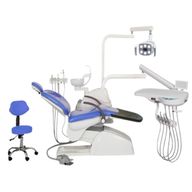
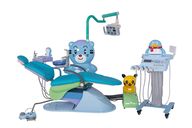
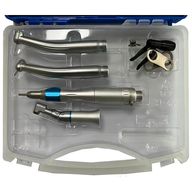
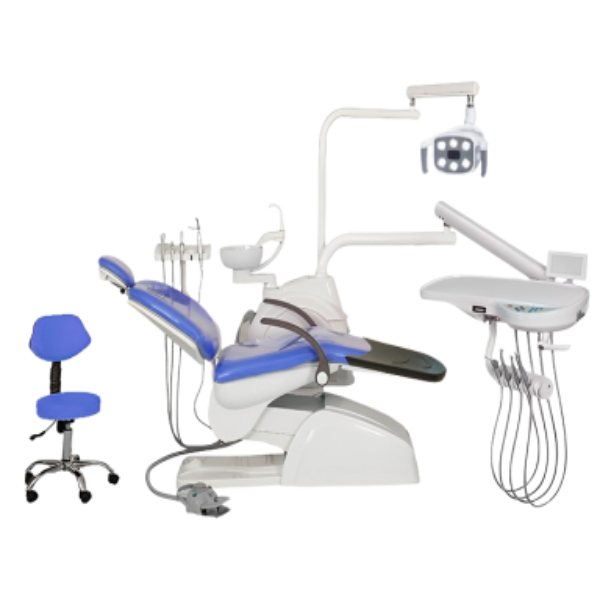
| Dental treatment unit with handpieces and suction | B | Declaration |
| Dental suction unit | B | Declaration |
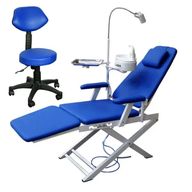
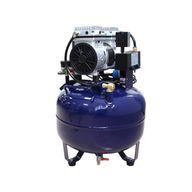
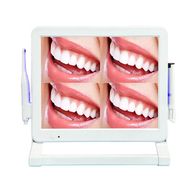
| Dental patient chair on its own, air compressor, intraoral camera | Usually A | Declaration |
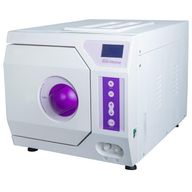
| Steam steriliser (autoclave) | C | Registration |
The autoclave is the one to plan for. Rule 15 places any device used to sterilise medical devices in Class C; "Class B" on an autoclave's specification refers to its sterilisation cycle under EN 13060, not to its risk class. A Class C device needs a registration number from the ministry, with a technical dossier in the ASEAN CSDT format — a longer process than the chair it ships with.
Class A and B: the declaration of applicable standards
For Class A and B devices the applicant files a declaration of applicable standards (công bố tiêu chuẩn áp dụng) online with the provincial Department of Health, and the receipt is published on the ministry's portal. Under Article 21 of Decree 98, circulation numbers — declaration numbers included — do not expire. The file (Article 26) contains:
- the manufacturer's ISO 13485 certificate, valid on the filing date;
- a letter of authorisation from the product owner and a warranty confirmation;
- a Certificate of Free Sale, valid on the filing date — required for every imported device; there is no reference-country alternative at Class A and B;
- a technical summary in Vietnamese, the applicable standard or conformity certificate, the instructions for use in Vietnamese with the original, and a label sample.
Class C and D: registration
Class C and D devices need a registration number (số lưu hành) from the ministry's department, with the full CSDT dossier. A faster route under Article 29 applies to devices already approved by a recognised regulator — the US FDA, the EU, the UK, Switzerland, Australia, Canada, Japan, Korea and China's national NMPA among them. For a Chinese autoclave, check which authority approved it: steam sterilisers are Class II in China and are approved by provincial authorities rather than the national NMPA, so the fast route may not apply.
Who can file
A foreign factory cannot file itself. Under Article 25 of Decree 98 the applicant is a Vietnamese company that owns the product or is authorised by its owner, or the foreign trader's permanent representative office in Vietnam, and it must have a warranty facility in the country. Separately, whoever sells Class B, C or D devices declares its eligibility to trade them with the provincial health department.
Legalisation and the apostille
Decree 98 requires the letter of authorisation, the warranty confirmation and the Certificate of Free Sale to be legalised; the ISO certificate needs no legalisation. Since 11 September 2026 Vietnam applies the Hague Apostille Convention, and China has done so since November 2023. Under Decree 293/2026, an apostilled foreign public document is exempt from consular legalisation. In practice: the factory's letters are notarised in China and then apostilled; the Free Sale certificate is apostilled; Vietnamese translations are still required. Health departments are adjusting to the change, so confirm with your filing agent what they accept.
Labelling under Decree 37/2026
Goods labelling is now governed by Decree 37/2026/ND-CP (January 2026), which replaced Decrees 43/2017 and 111/2021; labels printed under the old rules may be used until January 2028. A secondary label in Vietnamese is allowed for imported goods: it is applied before the goods are put on sale, must not cover the original label, and carries the mandatory content in Vietnamese. For medical devices that includes the circulation or import-licence number, the serial or lot number and the date of manufacture; Decree 98 separately requires Vietnamese instructions for use and warranty information.
Wi-Fi products
Since 31 December 2025, Circular 29/2025/TT-BKHCN of the Ministry of Science and Technology sets which radio products need a conformity certificate and declaration. Wi-Fi equipment at 2.4 GHz and 5 GHz with a transmit power of 60 mW EIRP or more is in scope; lower-power Wi-Fi and Bluetooth are excluded, and the rule applies where the product's HS code and description both match the list. Most intraoral cameras are declared under Chapter 90 as medical devices, which is probably outside it — but confirm with your agent before you import a Wi-Fi intraoral camera or a camera computer with built-in Wi-Fi, and ask the factory for the radio module's output power.
Customs, Form E and VAT
- No import licence for declared devices. A device with a valid declaration or registration number needs no separate import licence (Article 48 applies only to devices without one); the importer must hold the number or be authorised by its holder, and the authorisation goes to customs. The transitional import licences of earlier years ended on 30 June 2025.
- No used equipment. Used medical devices are on Vietnam's list of goods banned from import, with narrow exceptions by ministry permit.
- Form E. Chinese-origin equipment qualifies for preferential duty under the ASEAN–China Free Trade Agreement with a Form E certificate of origin. We do not publish duty rates; your customs agent confirms the tariff line — 9402.10 for a dental chair, 9018.49 for a dental unit, 8414 for a compressor, 8419.20 for a steriliser — and the landed cost.
- VAT on medical devices is 5 percent under the 2024 VAT Law (in force July 2025); the temporary reduction for the 10 percent band does not apply to them.
- Price posting. Traders of medical devices must post their prices, at the point of sale or on the ministry's portal (Decree 98 as amended by Decree 85/2024); dental chairs, autoclaves and cameras are not among the groups that need a separate price declaration.
Public tenders
Public hospitals buy through tenders under the 2023 Law on Bidding and Decree 214/2025, which gives a price preference to Vietnamese-made goods with sufficient domestic content and lets buyers restrict a tender to domestic goods when enough domestic producers qualify; tenders cannot name a brand. Imported dental chairs therefore sell mainly to private clinics, chains and private hospitals.
Delivery by sea and by road
Our factory is in Foshan, an hour from the container ports of Guangzhou (Nansha) and Shenzhen. Direct services from Shekou reach Hai Phong in a day or two at sea — a few days door to door with cut-off and clearance — and Ho Chi Minh City (Cat Lai or the Cai Mep terminals) in about a week. By road, trucks from Guangdong cross at Huu Nghi in Lang Son, where a dedicated freight road opened in 2024 and a second in November 2025 as part of a smart-border-gate pilot; Hanoi is two to three days from Guangdong. For northern Vietnam, road freight often wins door to door; for the south, sea freight to Cat Lai is the usual choice.
The mains supply is 220 V / 50 Hz, the same as China, with Type A and C sockets, so the standard 220 V / 50 Hz version of our chairs and compressors is the right one; tell us the socket type and it goes on the proforma invoice.
After the sale
The holder of the declaration or registration keeps traceability records, warns users of risks and recalls defective devices. When the ministry flags a risk, the holder investigates within 30 days and the ministry can suspend a batch within three working days; serious incidents are reported to the ministry and users, and the batch suspended while they are investigated. A number can be revoked after repeated recalls, and the ministry has set 2028 and 2030 as targets for unique device identification. In practice: serial-number records of every unit installed, spare parts in the country and a technician who can reach the clinic.
What to ask your factory for — a supplier checklist
- ISO 13485 certificate, valid on the filing date; CE certificate and declaration of conformity for the dental units, covering the exact model numbers.
- Letter of authorisation and warranty confirmation, notarised and apostilled; Certificate of Free Sale, apostilled.
- Technical description and instructions for use for translation into Vietnamese; label samples; the class of each device under Circular 05/2022.
- For an autoclave: the full CSDT dossier for Class C registration, and which authority approved it in China.
- For Wi-Fi products: the radio module's output power and test reports.
- Electrical specification — 220 V / 50 Hz, socket type — on the proforma invoice.
- Form E certificate of origin, commercial invoice and packing list matching the tariff lines agreed with your customs agent.
- A spare-parts kit and remote technical training with the first container.
Planning the timeline
- Chairs, units, compressors, cameras (Class A–B): apostille the documents, translate, file the declaration — typically weeks rather than months — then order. Delivery itself takes days.
- An autoclave (Class C): start the registration in parallel and expect it to take longer; ship the chairs first if it is not ready.
- Labels: move to Decree 37/2026 labelling for new stock; old labels run out in January 2028.
Working with VOTEN on Vietnamese orders
VOTEN Medical manufactures dental chairs, dental units, compressors and clinic equipment in Foshan, China, and supplies clinics and dealers in Vietnam through an authorised distributor. For a Vietnamese filing company we provide the ISO 13485 certificate, the letter of authorisation and warranty confirmation, the Certificate of Free Sale, the CE certificate and declaration of conformity for the dental units, the technical description and label samples against the model numbers on your order, apostilled where needed, and the Form E certificate of origin; the chairs and compressors ship in the standard 220 V / 50 Hz version.
If you are planning a first order for Vietnam, send us your model list and your city and we will come back with the document pack, specifications, packing data and distributor pricing. Our Vietnam page covers the market, the electrical version and delivery in more detail; the equipment range is on our dental chair and products pages.
Sources: Consolidated Decree 98/2021 on medical devices (08/VBHN-BYT, 2026); Circular 05/2022/TT-BYT, classification rules; Decree 98, Article 27 (legalisation); Decree 98, Article 29 (fast route); Decree 98, Article 47 (import); Circular 44/2025/TT-BYT; HCCH, Apostille Convention status table; Decree 293/2026 on apostilles; Decree 37/2026 on goods labelling (EY); Circular 29/2025/TT-BKHCN (radio equipment); Consolidated VAT Law (12/VBHN-VPQH, 2026); Decree 118/2022, ACFTA tariff schedule; Decree 214/2025 on bidding preferences; ONE, intra-Asia schedule (June 2026); Lang Son, Huu Nghi smart border gate freight road (2025); HCMC press centre, international patients (2026); US ITA, Vietnam healthcare (2026).
Talk to the factory
Specifications confirmed in writing, packing data and distributor pricing within one business day.
VOTEN in Vietnam — local distributor, which voltage version to order, shipping times to Ho Chi Minh City or Hai Phong and the questions buyers there ask most.
Related
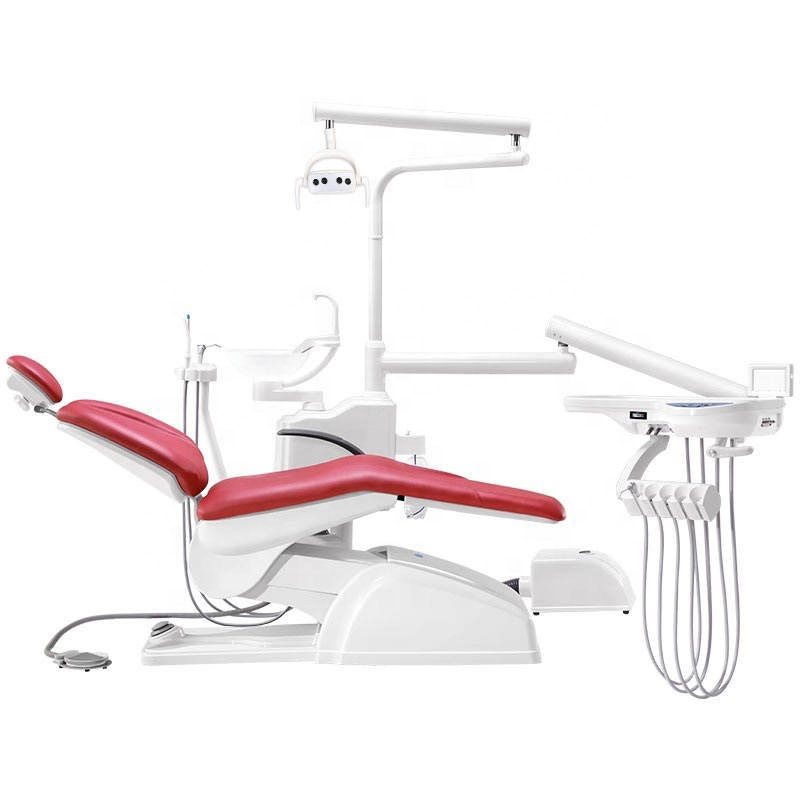
Importing Dental Equipment into Thailand: Thai FDA Notification, Import Licensing and Customs Guide
What a Thai dealer needs to import dental chairs and clinic equipment: how the Thai FDA classes dental devices, listing and detailed notification, the import establishment registration, the dossier and the abridged route, English labelling for professional devices since June 2026, licence per invoice, NBTC rules for Wi-Fi devices, Form E, VAT and transport.
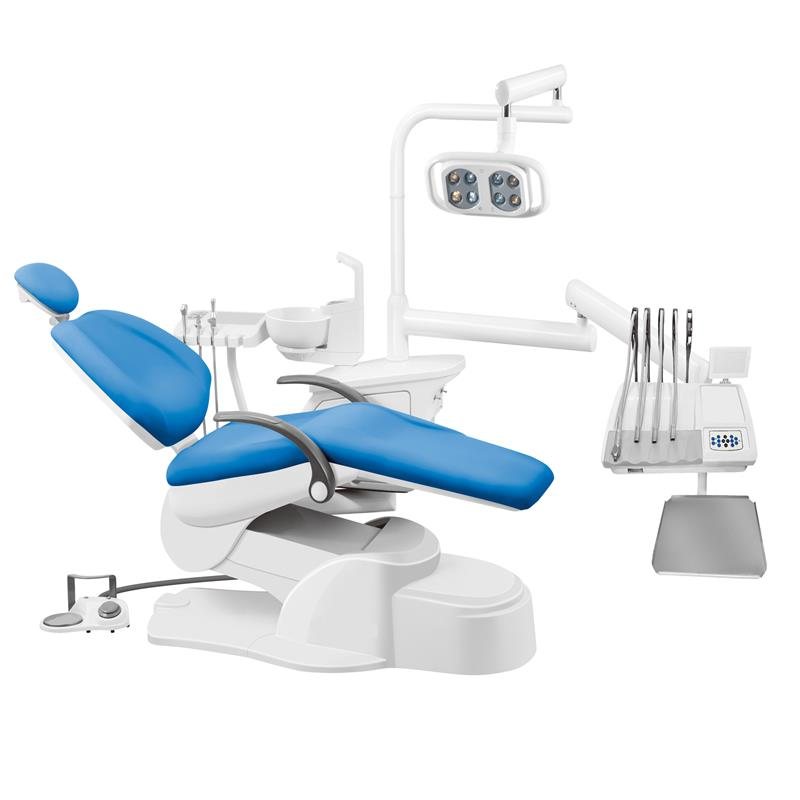
Importing Dental Equipment into Indonesia: AKL Licence, Distributor Licensing and Customs Guide
What an Indonesian distributor needs to import dental chairs and clinic equipment: the 2025–2026 Ministry of Health rules, device classes, the AKL marketing licence and the letter of appointment, what your factory must supply, labelling in Bahasa Indonesia, postel certification for Wi-Fi devices, halal rules, customs, Form E, VAT and public procurement.
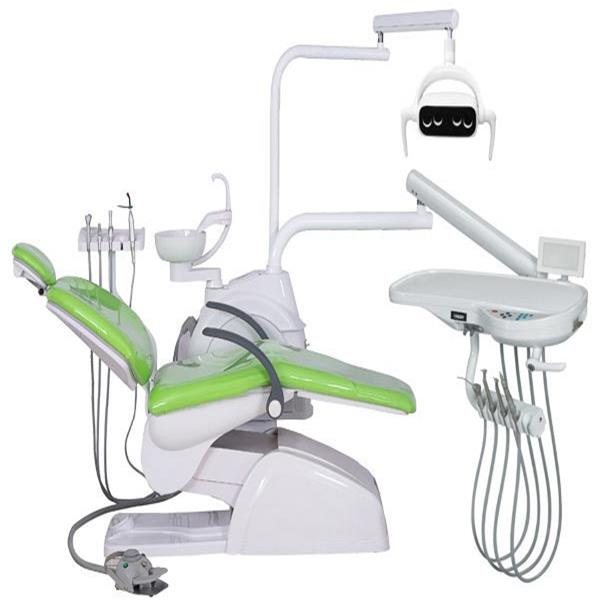
Importing Dental Equipment into the UAE: EDE Registration, Import Permits and Customs Guide
What a UAE dealer needs to import dental chairs and clinic equipment: the Emirates Drug Establishment and the 2024 law, manufacturer and product registration through a licensed marketing office or medical warehouse, the documents and embassy legalisation your factory must supply, Arabic and English instructions, import permits, TDRA approval for Wi-Fi devices, customs, VAT and shipping in the 2026 Gulf crisis.