
Thailand is Southeast Asia's medical-tourism capital — private hospitals see around three million visits a year from foreign patients and residents — and dentistry is one of the treatments people travel for, in Bangkok, Phuket and Chiang Mai. About 22,000 dentists are registered with the Dental Council, eighteen accredited institutions train more, and the private clinics that serve tourists and Bangkok's middle class compete on the look and feel of the treatment room as much as on price.
Thailand's device rules are built on the ASEAN model and have been modernised in steps since 2021, with several changes in 2025 and 2026 that matter to dental dealers: professional equipment may now be labelled in English, renewals moved to a fixed window, and Thailand joins the Apostille Convention in February 2027. This guide sets out the steps in order.
Thai FDA requirements are updated regularly. Treat this as a planning framework and confirm the current requirements with your importer and your customs broker before you commit to a shipment.
The legal framework
Medical devices are governed by the Medical Device Act B.E. 2551 (2008), as amended by the Act (No. 2) B.E. 2562 (2019), and controlled by the Thai FDA's Medical Device Control Division. Devices are classed by a Ministry of Public Health notification of 2019 on risk-based classification, and three Ministerial Regulations of B.E. 2563, in force since February and March 2021, set the procedures for each class.
How Thailand classes dental equipment
Devices are classed 1 (lowest risk) to 4 under rules that follow the ASEAN Medical Device Directive, and a system takes the highest class of its parts. The Thai FDA has not published a dental-specific list; its online classification questionnaire confirms the class of a specific product. Applying the rules:
| Device | Likely class | Route |
|---|---|---|
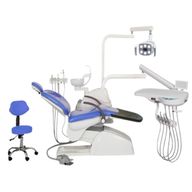
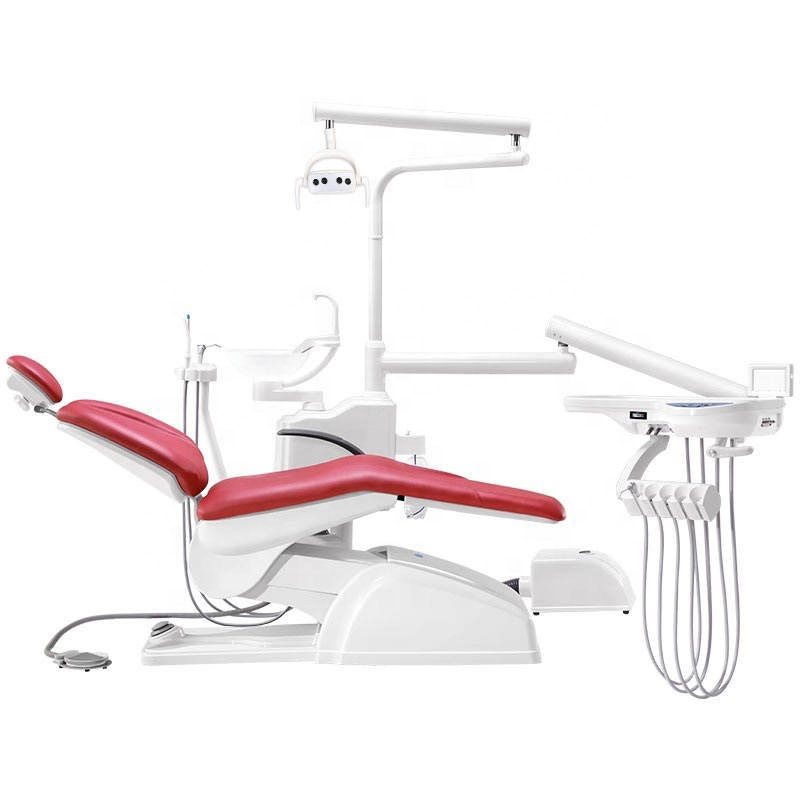
| Dental treatment unit with handpieces and suction | 2 | Detailed notification |
| Dental suction unit | 2 | Detailed notification |
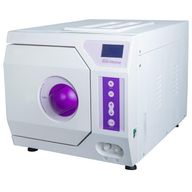
| Steam steriliser (autoclave) | 3 | Detailed notification |
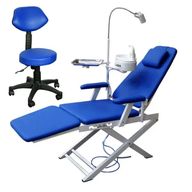
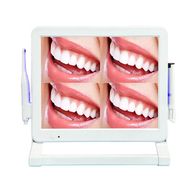
| Dental patient chair on its own, intraoral camera | Probably 1 | Listing |
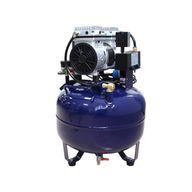
| Dental air compressor | 1 or 2 | Confirm with the questionnaire |
Listing, notification and licence
- Class 1 — listing (jod jaeng): label, instructions for use, specifications, declaration of conformity and letter of authorisation.
- Class 2 and 3 — detailed notification (jaeng raikan la-iad), issued as a Certificate of Notified Medical Device. A dental unit and an autoclave both go this way.
- Class 4 — a licence. Not relevant to dental chairs.
Certificates are valid for five years, counted from the year of approval and ending on 31 December of the final year. Since 2025, renewals are filed on the Thai FDA's SKYNET e-submission system between 1 October and 31 December of the expiry year; a late renewal is possible only in January of the following year, with a daily fine. The Thai FDA does not publish a fixed review time per class; for a Class 2 file, plan on several months.
The importer and the dossier
A foreign manufacturer cannot file. The applicant — and holder of every certificate — is a Thai company with an import establishment registration for medical devices (bai jod tabian sathan prakob kan nam khao), which must be in place before any product is filed; new forms for it took effect in May 2026. The manufacturer authorises it with a letter of authorisation.
For a Class 2 or 3 device on the full route, the Thai FDA's checklist covers the label and instructions for use, an executive summary and device description, the essential-principles checklist, manufacturer information, a quality-system certificate such as ISO 13485, the declaration of conformity, the letter of authorisation, and the verification, validation and risk-analysis summaries — in effect the ASEAN CSDT dossier.
- Abridged route. Since 2024 a device approved for at least a year by a reference agency — the United States, the European Union, Japan, Canada or Australia — can use a shorter review, so a CE certificate for the dental unit is the most useful asset a Chinese factory can bring. China's NMPA is not on the list. Thailand also runs reliance programmes with Singapore's HSA and, since May 2026, Malaysia's MDA.
- Free Sale certificate. It is no longer on the Thai FDA's checklist for the full route; your importer will say if it wants one for a particular file.
- Legalisation. Thailand's accession to the Hague Apostille Convention takes effect on 28 February 2027. Until then, documents that must be legalised go through the Thai embassy or consulate; after that, an apostille from China will do.
Labelling: English allowed for professional devices
A new Ministry of Public Health notification on labels and accompanying documents took effect on 20 June 2026. Devices for home use need Thai labelling; devices for professional use — dental chairs, units, autoclaves and cameras included — may be labelled in Thai or English, and instructions may be supplied electronically, for example by QR code. Existing labels have a transition period. Agree the label with your importer before the factory prints it.
Each shipment: licence per invoice and the FDA checkpoint
Every import of a medical device needs a Licence per Invoice (LPI), issued through the National Single Window, which links the commercial invoice to the importer's valid Thai FDA certificate numbers. The customs declaration is then filed and the goods presented at the FDA checkpoint at the port, with the declaration, invoice, bill of lading, LPI and, if requested, a sample. This applies to Class 2 notified devices as well as licensed ones. A draft notification on refurbished medical devices went to public hearing in August 2026; until it is issued, assume used equipment needs the same certificates as new.
Wi-Fi products: NBTC
A Wi-Fi or Bluetooth intraoral camera, or a camera computer with built-in Wi-Fi, is also radio equipment under the National Broadcasting and Telecommunications Commission. Wi-Fi and Bluetooth equipment goes through the supplier's declaration of conformity (SDoC) route against NBTC technical standards, filed by a Thai company — in practice the importer — and since February 2026 SDoC files for 2.4 / 5 GHz radios need electrical-safety test reports. No exemption for medical devices has been published, so plan both the Thai FDA notification and the NBTC declaration for wireless models.
Customs, Form E and VAT
- Form E. Chinese-origin equipment qualifies for preferential duty under the ASEAN–China Free Trade Agreement with a Form E certificate of origin; RCEP is an alternative. We do not publish duty rates; your customs broker confirms the tariff line — 9402.10 for a dental chair, 9018.49 for a dental unit, 8414 for a compressor, 8419.20 for a steriliser — and the landed cost.
- VAT remains at 7 percent until 30 September 2027 under Royal Decree No. 807 (2026); the statutory rate is 10 percent, so check the rate again before quoting deliveries after that date.
- Electrical standards. No mandatory Thai Industrial Standard has been found for medical electrical equipment, though some hospital tenders ask for one.
Public tenders
Thai public procurement favours goods certified "Made in Thailand" by the Federation of Thai Industries and gives SMEs a price margin, and some university and hospital tenders for dental units require a Thai-made product outright. Imported chairs therefore sell mainly to private clinics, dental chains and private hospitals — the part of the market that is growing with medical tourism.
Transport and power
Our factory is in Foshan, an hour from the container ports of Guangzhou (Nansha) and Shenzhen. Laem Chabang, 130 km from Bangkok, handles most of Thailand's container traffic; with sailings almost daily, forwarders quote about one to two weeks door to door from South China, port-to-port being shorter. Bangkok Port on the river suits smaller vessels and shared-container cargo. By road, trucks reach Bangkok through Laos or Vietnam in about a week including border clearance, and the China–Laos railway with transfer at the Thai border takes ten to fourteen days. A single chair travels as LCL or by truck; a first order for resale is usually a 20 ft container.
The mains supply is 220–230 V / 50 Hz. The official earthed plug is Type O (TIS 166-2549), and most sockets are hybrids that also take Type A, B and C plugs; the standard 220 V / 50 Hz version of our chairs and compressors is the right one, with a Type O or C plug stated on the proforma invoice.
After the sale
The certificate holder reports malfunctions, adverse events and field safety corrective actions to the Thai FDA under a 2020 Ministry notification — reported timelines are within 48 hours for a serious public-health threat, 10 days for a death or serious injury and 30 days for events that could cause one — runs recalls under the Thai FDA's recall guidance, and files an annual production, import and sales report by 31 March, now electronically. In practice: serial-number records of every unit installed, spare parts in the country and a technician who can reach the clinic.
What to ask your factory for — a supplier checklist
- ISO 13485 certificate, CE certificate and declaration of conformity for the dental units, covering the exact model numbers — the CE certificate opens the abridged route.
- Letter of authorisation naming your company; legalised through the Thai embassy until 28 February 2027, apostilled after that, if your importer requires it.
- The CSDT dossier: device description, essential-principles checklist, verification and validation summaries, risk analysis, label and instructions for use.
- Labels in English (Thai if your importer prefers), with electronic instructions where useful.
- For Wi-Fi products: radio and electrical-safety test reports for the NBTC declaration.
- Electrical specification — 220 V / 50 Hz, Type O or C plug — on the proforma invoice.
- Form E certificate of origin, commercial invoice and packing list matching the tariff lines agreed with your broker and the LPI.
- A spare-parts kit and remote technical training with the first container.
Planning the timeline
- An importer with an establishment registration: confirm each device's class, file the listings (chair, camera) and the detailed notifications (unit, autoclave) — several months for the notifications — then order; each shipment needs its LPI.
- A new company: the import establishment registration first, then as above.
- Every five years: renew between 1 October and 31 December of the expiry year.
Working with VOTEN on Thai orders
VOTEN Medical manufactures dental chairs, dental units, compressors and clinic equipment in Foshan, China, and supplies clinics and dealers in Thailand through an authorised distributor. For a Thai importer we provide the ISO 13485 and CE certificates for the dental units, the declaration of conformity, the letter of authorisation, the technical dossier and test reports against the model numbers on your order, English labelling and the Form E certificate of origin; the chairs and compressors ship in the standard 220 V / 50 Hz version.
If you are planning a first order for Thailand, send us your model list and your city and we will come back with the document pack, specifications, packing data and distributor pricing. Our Thailand page covers the market, the electrical version and transport in more detail; the equipment range is on our dental chair and products pages.
Sources: Thai FDA, manufacture and import of medical devices; MoPH notification on risk-based classification (2019); Thai FDA, renewals; Thai FDA, SKYNET renewal window; Thai FDA, import establishment registration; Thai FDA abridged route and reference agencies (2024); MoPH notification on labels and accompanying documents (2025); HCCH, Apostille Convention status table; Thai FDA, importation for sale; Thai FDA, licence per invoice; NBTC certification for radio equipment; Royal Decree No. 807 (VAT rate, 2026); Thailand–Malaysia reliance programme (2026); Draft notification on refurbished devices (2026); Dental Council of Thailand, accredited institutions; Number of dentists in Thailand (2025); Kasikorn Research, foreign patient visits; China–Thailand freight times (forwarder).
Talk to the factory
Specifications confirmed in writing, packing data and distributor pricing within one business day.
VOTEN in Thailand — local distributor, which voltage version to order, shipping times to Laem Chabang and the questions buyers there ask most.
Related
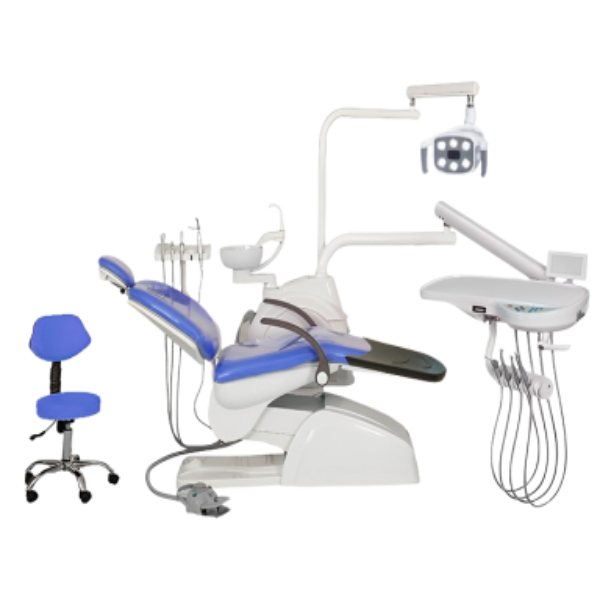
Importing Dental Equipment into Vietnam: Decree 98 Declaration, Registration and Customs Guide
What a Vietnamese dealer needs to import dental chairs and clinic equipment: how Decree 98 classes dental devices, the Class A–B declaration and the Class C registration an autoclave needs, who can file, the documents and apostille, Vietnamese labelling under Decree 37/2026, Wi-Fi rules, customs, Form E, VAT and delivery by sea or road.
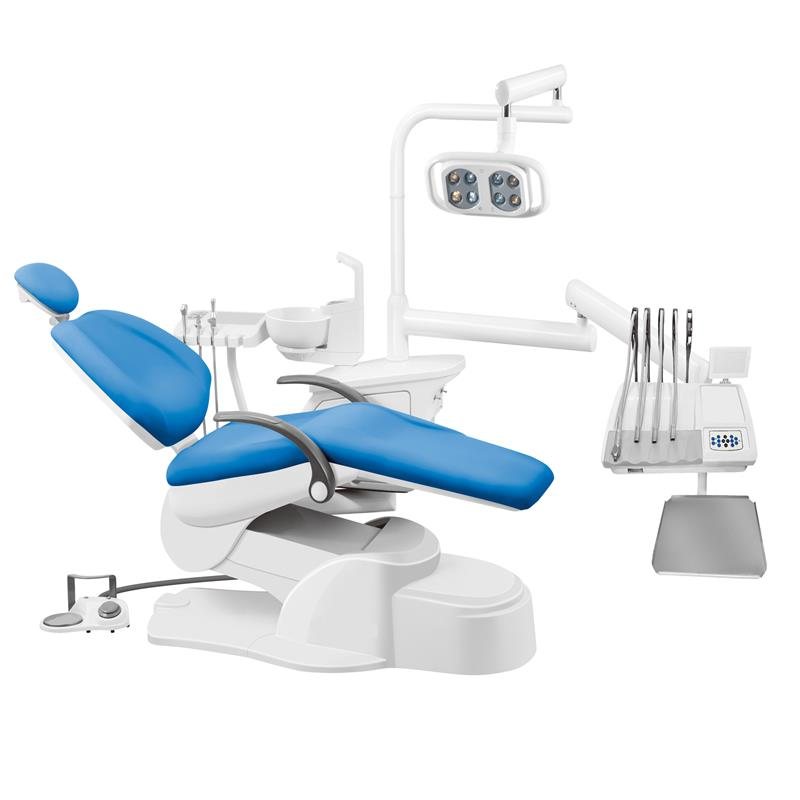
Importing Dental Equipment into Indonesia: AKL Licence, Distributor Licensing and Customs Guide
What an Indonesian distributor needs to import dental chairs and clinic equipment: the 2025–2026 Ministry of Health rules, device classes, the AKL marketing licence and the letter of appointment, what your factory must supply, labelling in Bahasa Indonesia, postel certification for Wi-Fi devices, halal rules, customs, Form E, VAT and public procurement.
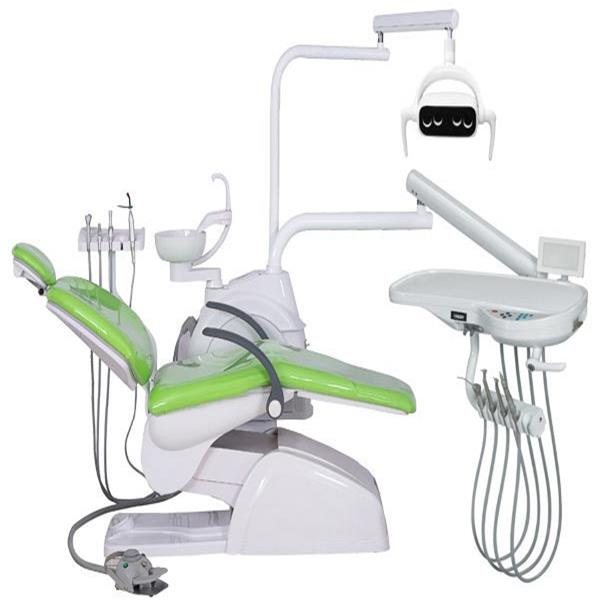
Importing Dental Equipment into the UAE: EDE Registration, Import Permits and Customs Guide
What a UAE dealer needs to import dental chairs and clinic equipment: the Emirates Drug Establishment and the 2024 law, manufacturer and product registration through a licensed marketing office or medical warehouse, the documents and embassy legalisation your factory must supply, Arabic and English instructions, import permits, TDRA approval for Wi-Fi devices, customs, VAT and shipping in the 2026 Gulf crisis.