
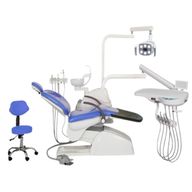
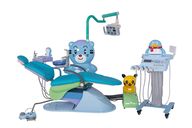
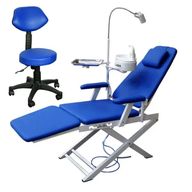
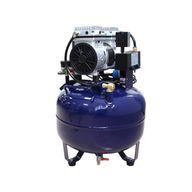
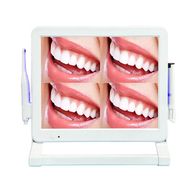
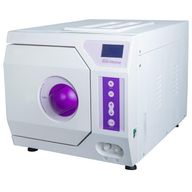
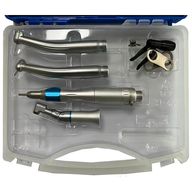
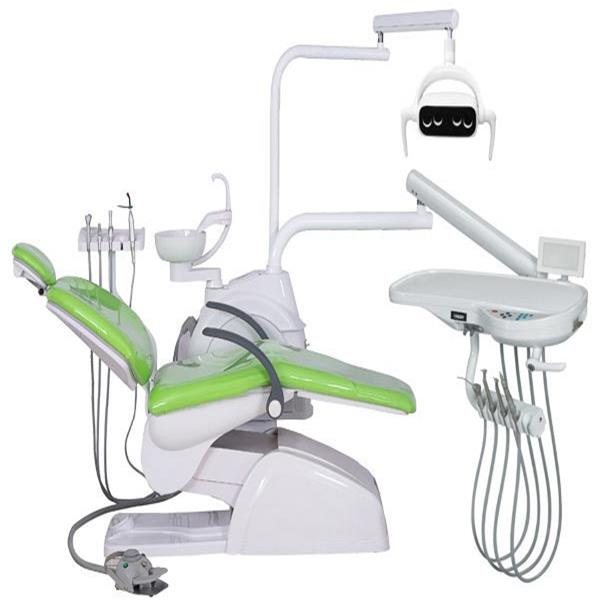
The UAE is the equipment showcase of the Gulf. Dubai alone had licensed more than 4,100 dentists by 2024, dentistry is the largest specialty in its medical-tourism trade, and AEEDC Dubai — the world's largest annual dental exhibition — brings dealers from across the Middle East, Africa and South Asia to the city every January (the 2027 edition runs 19–21 January). Clinics in Dubai, Abu Dhabi and Sharjah compete on finish and patient experience, and almost every chair, compressor and steriliser they use is imported.
The rules for bringing those devices in changed in 2025. A new federal authority, the Emirates Drug Establishment (EDE), now registers medical devices and issues import permits in place of the Ministry of Health and Prevention, and in 2026 the Strait of Hormuz crisis changed how containers reach Dubai. This guide sets out the steps in order.
The EDE took over most services only in late 2025, and its procedures are still being published. Treat this as a planning framework and confirm the current requirements with your UAE representative and your customs broker before you commit to a shipment.
The legal framework and the EDE
Medical devices are governed by Federal Decree-Law No. 38 of 2024 on medical products, the pharmacy profession and pharmaceutical establishments, in force since 2 January 2025, which replaced Federal Law No. 8 of 2019. Its basic rule (Article 5) is that a medical product — and the definition includes medical equipment — may not be imported, distributed, held, sold, displayed or used without a marketing authorisation from the EDE.
The EDE was created under the same law and took over medical-product services from MOHAP in phases; MOHAP announced in January 2026 that marketing authorisations, import and export permits, recalls, establishment licensing and adverse-event reporting had moved, and applications are now made on the EDE's own portal. The emirate health authorities — the DHA in Dubai and the DoH in Abu Dhabi — license clinics and practitioners, not devices; a clinic inspection does, however, check the equipment installed, so a clinic should buy registered models from a licensed supplier.
Who can register and import
A foreign factory cannot register its own products. Under Article 6 of the law the application is filed by a UAE establishment licensed by the EDE as a marketing office or a medical warehouse, designated by the manufacturer, which becomes the holder of the marketing authorisation and must employ a qualified responsible person resident in the UAE. The same local agent is the only party that can apply for the import permit for that product.
Two points for a dealer planning a long-term range:
- The manufacturer is registered first. The marketing-authorisation holder and the manufacturing site are registered with the authority before any of their products, so the first model takes longest and the rest of the range follows on the same registration.
- More than one agent per product. In February 2026 the EDE activated a mechanism under the new law aimed at ending single-agent control of medical products, so that a product can be represented by more than one authorised agent. How it applies to each product category is still being phased in; ask your representative how it affects the products you register.
How dental equipment is classed
The UAE classes devices I to IV by risk, broadly in line with the international (GHTF) model — roughly, EU Class I maps to UAE Class I, IIa to II, IIb to III and III to IV. Safety and performance data beyond the basic file are required for Classes III and IV. The EDE has not published a dental-specific list. By that mapping a dental chair sits in Class I or II, a dental unit with handpieces, a compressor, suction or an intraoral camera typically in Class II, and a steam steriliser in Class II or III. Where the class is unclear, the EDE offers a formal classification decision on application, and your representative should confirm the class before the file is built.
The registration file
The documents required for a medical-equipment registration have been consistent for years, and are what your factory needs to prepare:
- the factory (manufacturing site) registration and the agency agreement with the local agent;
- a certificate of approval in a recognised market appropriate to the class — typically a CE certificate or US FDA clearance — and the declaration of conformity;
- a Certificate of Free Sale or registration certificate from the country of origin, legalised by the UAE embassy in that country;
- ISO 13485 certification, product information, the instructions for use and a post-market surveillance plan.
Legalisation, not apostille. The UAE is not a party to the Hague Apostille Convention, so an apostille issued in China is not enough. A Chinese Certificate of Free Sale goes through the full chain: notarisation, certification by China's foreign ministry or an authorised provincial office, legalisation at the UAE embassy or a consulate in China, then attestation by the UAE Ministry of Foreign Affairs. Allow several weeks for it.
A marketing authorisation is valid for five years and is renewed through a separate service. The service standard for a registration decision has been 45 working days; three to eight months from starting the file is a realistic plan for a first model, faster for the rest of the range.
Labelling: Arabic and English
Article 38 of the law requires the product leaflet — printed or electronic — to be in Arabic and English unless the EDE decides otherwise, and the labels to match those approved with the marketing authorisation. Plan for bilingual instructions for use for every device, and agree the Arabic text with your representative before the factory prints labels; changing a label after registration is itself a variation.
Import permits and the port
- Every import needs an EDE import permit for a registered product, applied for by the local agent named in the marketing authorisation. It is a two-stage service — an initial permit, then a shipment clearance request — with published service times of a few working days each, and the permit is valid for two months. The supporting file includes the catalogue, CE / ISO 13485 and the Free Sale certificate.
- The EDE can inspect shipments at the port, and the customs authorities treat medical and sterilisation devices as restricted goods that need this prior approval.
- Free zones. The law applies inside free zones too, and moving goods from a free zone into the mainland counts as an import, so a device held in Jebel Ali Free Zone still needs registration and a permit before it reaches a clinic. Re-exports also need a permit; if your business model is regional re-export, settle the route with your representative first.
Wi-Fi devices and other approvals
TDRA type approval. Equipment with Wi-Fi or Bluetooth — a wireless intraoral camera, or a camera computer with built-in Wi-Fi — needs type approval from the Telecommunications and Digital Government Regulatory Authority before it is sold. The application is made by a UAE supplier registered with the TDRA, the approval lasts three years, and the TDRA label goes on the packaging. No exemption for medical devices has been published, so plan it in addition to EDE registration. A USB camera with no radio does not need it.
RoHS. The UAE's restriction of hazardous substances in electrical and electronic equipment, administered by the Ministry of Industry and Advanced Technology, covers medical devices; ask the factory for its RoHS test reports and a certification body for the current route.
Electrical supply. The UAE runs at 230 V / 50 Hz, with the British-style three-pin plug (BS 1363, Type G) as the national standard. The standard 220 V / 50 Hz version of a dental chair or compressor is the right one — no frequency change is needed, unlike Saudi Arabia's 60 Hz grid.
Customs and VAT
- Importer. A trade licence with import activity and a customs client code (in Dubai, through the Dubai Trade portal). Clearance needs the commercial invoice, packing list, bill of lading, certificate of origin and delivery order, plus the EDE permit.
- Invoice attestation. Commercial invoices of AED 10,000 or more are attested by the UAE Ministry of Foreign Affairs, which can be done after arrival.
- Tariff line and duty. A bare dental chair is classified under 9402, a dental unit and its instruments under 9018.49, a compressor under 8414 and a steriliser under 8419.20; the camera's line is worth settling with your broker. Duty follows the GCC common external tariff — we do not publish duty rates; your broker builds the landed cost.
- VAT is 5 percent, recoverable by a VAT-registered importer. Medical equipment registered with the health authority has been zero-rated under Cabinet Decision 56 of 2017; from 1 October 2026 Cabinet Decision 149 of 2026 merges medicines and medical equipment into a single "medical products" category whose scope is set by a separate list. Confirm item by item whether your dental equipment qualifies before you price it.
Shipping in 2026: Khor Fakkan and the landbridge
Our factory is in Foshan, an hour from the container ports of Guangzhou (Nansha) and Shenzhen. Before 2026 direct services reached Jebel Ali in about 16–22 days. Jebel Ali and Abu Dhabi's Khalifa Port lie inside the Gulf, and since the Strait of Hormuz crisis began at the end of February 2026 almost no container ships have made that passage; Jebel Ali's volumes fell sharply.
- Carriers now discharge UAE cargo at Khor Fakkan or Fujairah on the east coast, outside the Strait, and move it by road to Dubai and the other emirates. Maersk's October 2026 update, for example, accepts UAE imports only at Khor Fakkan and to Jebel Ali via its landbridge, with transhipment through Salalah.
- Trucks at the east-coast ports have queued for hours, terminals have moved boxes to inland depots such as Sajaa, and carriers apply emergency surcharges.
- Book with a forwarder who confirms the port of discharge and the onward trucking in writing, check the carrier advisory the week you ship, and give clinics delivery dates with a margin.
A single chair or a small first order travels as LCL (shared container); a first order for resale is usually a 20 ft container, and the packing data we send with every quotation lists how many chairs and equipment combinations fit in a 20 ft and a 40 ft box. Small items — handpieces, curing lights, cameras — can go by air to Dubai in a few days, which in 2026 is often the fastest route.
After the sale
The marketing-authorisation holder is responsible under the law for monitoring how its devices perform and for running recalls, and the EDE issues the vigilance rules. Expect timelines in line with the region — serious public-health threats within about two days, deaths or serious injuries within ten, other incidents within thirty — and field safety corrective actions notified to the EDE before they start. Keep serial-number records of every unit installed, spare parts in the country and a technician who can reach the clinic.
What to ask your factory for — a supplier checklist
- ISO 13485 certificate, CE certificate and declaration of conformity for the dental units, covering the exact model numbers on your proforma invoice.
- A Certificate of Free Sale, legalised through to the UAE embassy — start this first, it takes the longest.
- The technical file and electrical-safety, EMC and RoHS test reports.
- Instructions for use and labels in Arabic and English, agreed with your representative before printing.
- For Wi-Fi products: the radio test reports your TDRA applicant needs, before the order.
- Electrical specification — 220 V / 50 Hz, Type G plug — on the proforma invoice.
- Commercial invoice, packing list and certificate of origin that match the tariff lines agreed with your broker; packing data per container.
- A spare-parts kit and remote technical training with the first container.
Planning the timeline
- Legalise the Free Sale certificate and agree the Arabic labelling — the slowest steps, and both can start before the order.
- Register the manufacturer and the first model through your licensed marketing office or medical warehouse — a few months; further models follow on the same manufacturer registration.
- TDRA approval for any wireless product, in parallel.
- Order, apply for the import permit and ship — and confirm the 2026 routing to Khor Fakkan or Jebel Ali with your forwarder at booking.
Working with VOTEN on UAE orders
VOTEN Medical manufactures dental chairs, dental units, compressors and clinic equipment in Foshan, China, and supplies clinics and dealers in the UAE through an authorised distributor. For a UAE marketing office or medical warehouse we provide the ISO 13485 and CE certificates for the dental units, the declaration of conformity, the technical file and test reports, and the instructions for use against the model numbers on your order, and we arrange the Arabic and English labelling with you; the chairs and compressors ship in the standard 220 V / 50 Hz version with the Type G plug.
If you are planning a first order for the UAE, send us your model list and your emirate and we will come back with the document pack, specifications, packing data and distributor pricing. Our UAE page covers the market and the electrical version in more detail, our dental show calendar has the AEEDC dates, and the equipment range is on our dental chair and products pages.
Sources: Federal Decree-Law No. 38 of 2024 on medical products; MOHAP, services transferred to the EDE; MOHAP, transfer of key services to the EDE (January 2026); Registration of medical equipment (classes, documents, validity); EDE, import permit for medical products; Multiple authorised agents for medical products (February 2026); HCCH, Apostille Convention status table; TDRA type approval for radio equipment (TÜV Rheinland); UAE RoHS (MoIAT); Abu Dhabi Customs, restricted commodities; Cabinet Decision No. 149 of 2026 (VAT, medical products); Maersk, Middle East operational update 51 (October 2026); MSC, UAE local information; Semafor, Jebel Ali in the Hormuz crisis (September 2026); DHA, licensed dentists and facilities in Dubai.
Talk to the factory
Specifications confirmed in writing, packing data and distributor pricing within one business day.
VOTEN in the UAE — local distributor, which voltage version to order, shipping times to Jebel Ali and the questions buyers there ask most.
Related
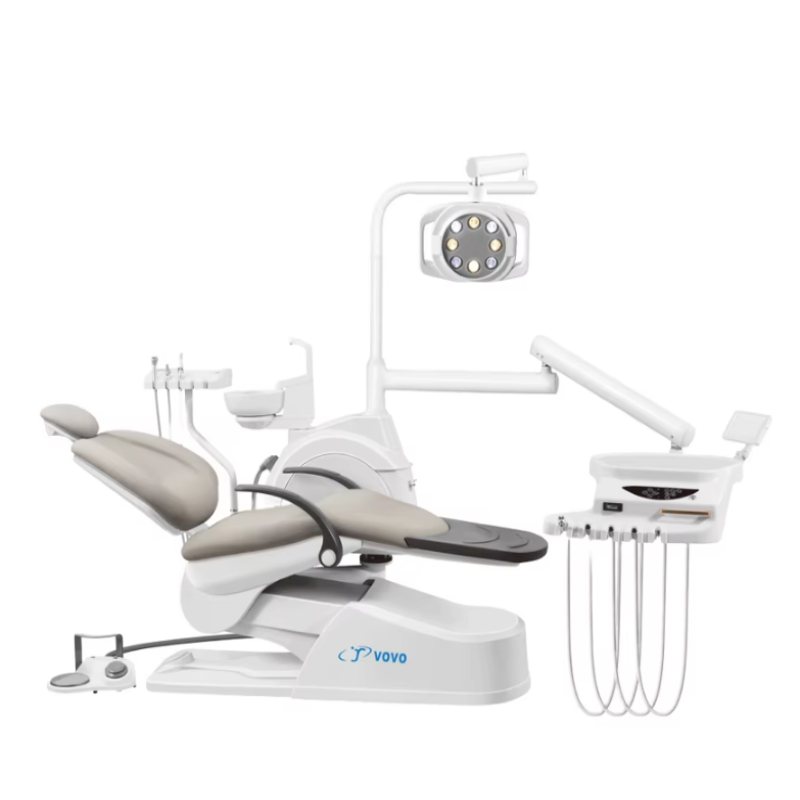
Importing Dental Equipment into Saudi Arabia: SFDA MDMA, Licensing and Customs Guide
What a Saudi dealer needs to import dental chairs and clinic equipment: how the SFDA classes dental devices, the Medical Device Marketing Authorization and the Authorized Representative, establishment licences, what your factory must supply, the 230 V / 60 Hz and SASO 2203 rules enforced at the port, Saudi-DI, customs, VAT and shipping through Jeddah in 2026.
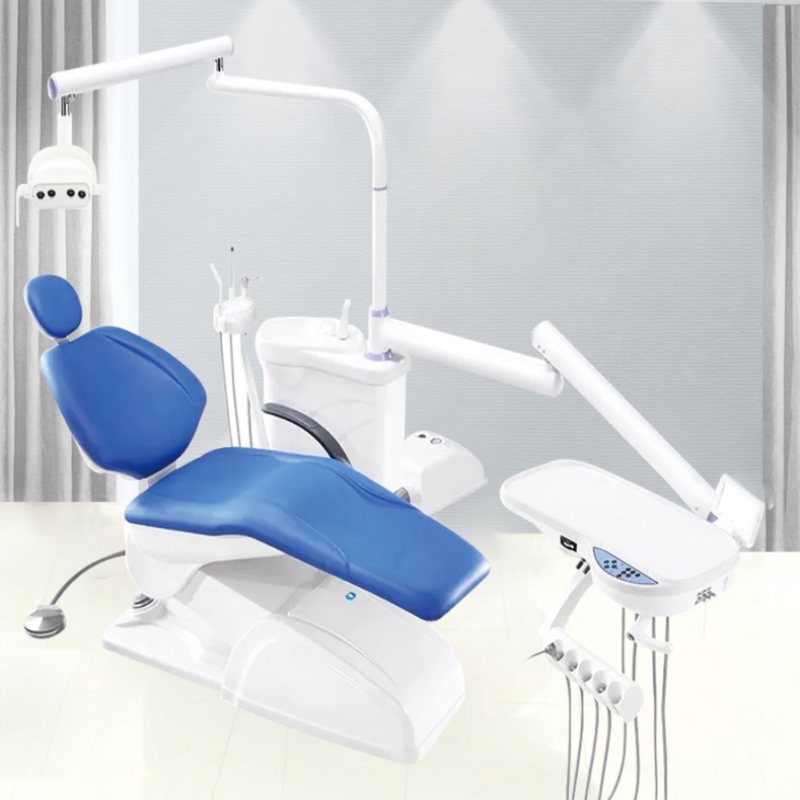
Importing Dental Equipment into South Africa: SAHPRA Licence, ICASA and Customs Guide
What a South African dealer needs to import dental chairs and clinic equipment: how SAHPRA classes dental devices, the Medical Device Establishment Licence and its ISO 13485 deadlines, what your factory must supply, ICASA approval for Wi-Fi equipment, SARS and the tariff line, the ports of entry and Durban's 2026 delays.
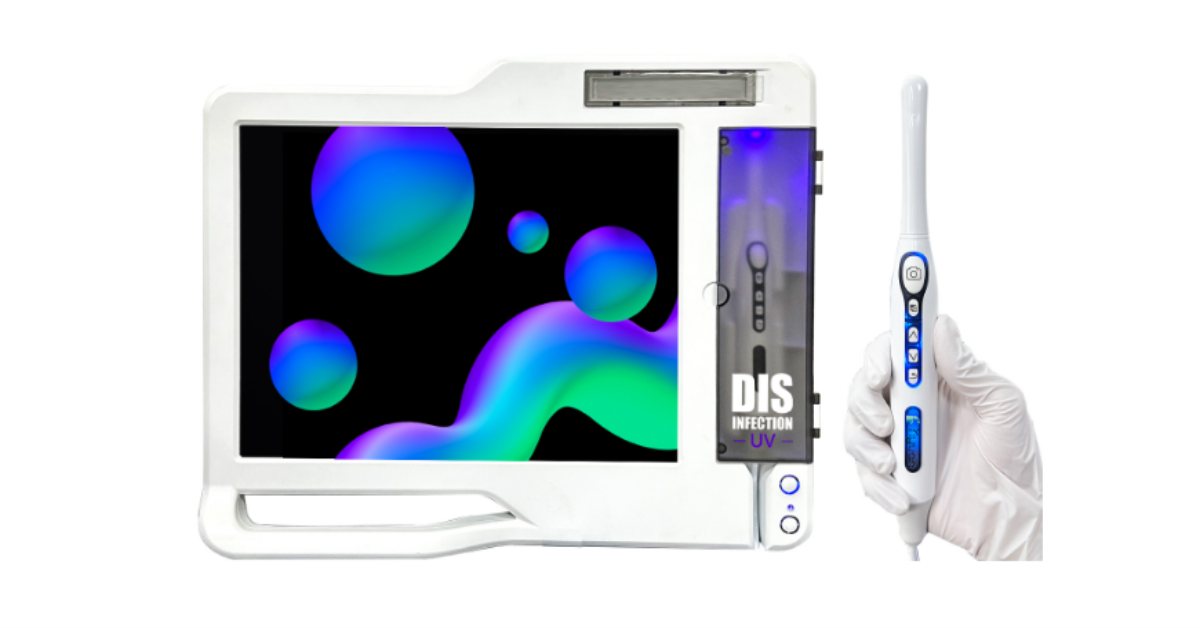
Intraoral Camera Buyer's Guide 2026: Types, the Specs That Matter, and How to Choose a Manufacturer
There is no single best intraoral camera — there is the right one for a clinic's set-up. This guide explains the four types sold in 2026, which specifications actually change the picture and which are marketing, what drives the price, how to choose a camera manufacturer in China, and which configuration to recommend to which clinic.