
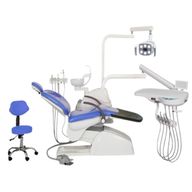
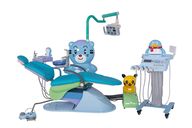
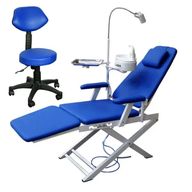
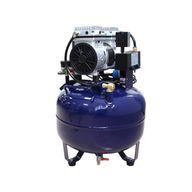
South Africa has the most developed private dental sector in Africa. The Health Professions Council counted about 6,700 registered dentists in 2023, alongside some 900 dental therapists and 1,250 oral hygienists; four out of ten dentists work in Gauteng, a quarter in the Western Cape and an eighth in KwaZulu-Natal, and only about one in five works in the public sector. Almost all of the chairs, compressors and cameras in those practices are imported.
South Africa also regulates medical devices differently from most markets. Today SAHPRA licenses the company that imports and distributes devices, not each device — registration of individual products has been planned for years but has not started. That makes the first container simpler than in Brazil or Egypt, provided the licence, a few deadlines and two approvals outside SAHPRA are in order. This guide sets them out in sequence.
SAHPRA is preparing new device regulations, and its guidelines change. Treat this as a planning framework and confirm the current requirements with your Authorised Representative and your clearing agent before you commit to a shipment.
How SAHPRA regulates dental equipment
Medical devices fall under the Medicines and Related Substances Act 101 of 1965 and the Regulations relating to Medical Devices and IVDs published in December 2016, administered by the South African Health Products Regulatory Authority (SAHPRA). Devices are classed A (low risk) to D (high risk), and where the class is unclear the higher one applies. SAHPRA's classification guideline (SAHPGL-MD-04, version 5, 2025) gives the answers for a dental practice:
| Device | Class | Why |
|---|---|---|
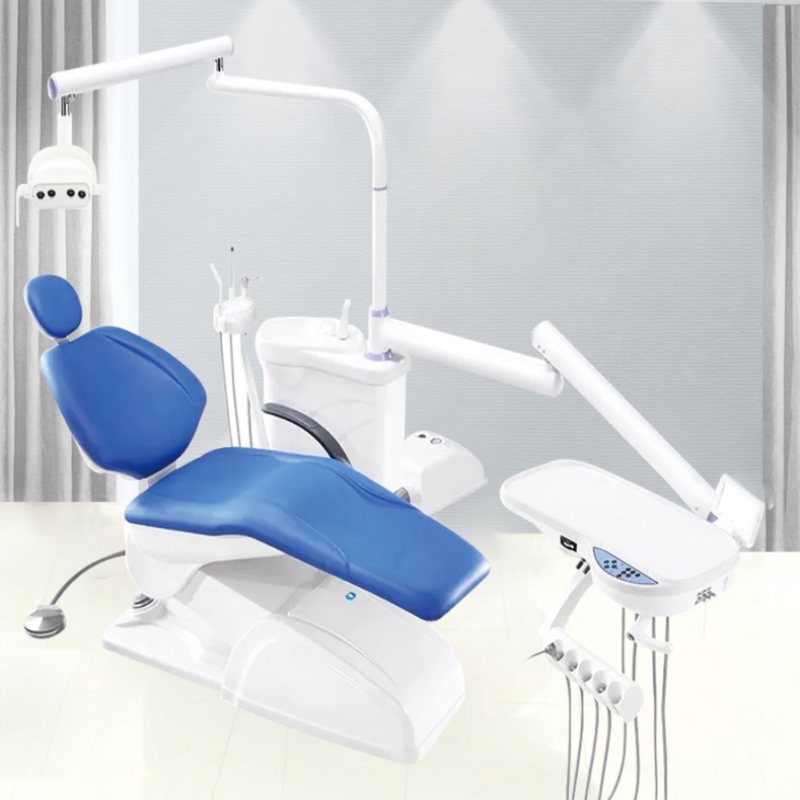
| Dental patient chair (on its own) | A | Named as an example under Rule 12 |
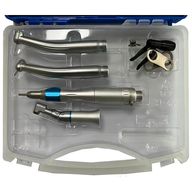
| Dental treatment unit with handpieces | B | Dental handpieces are Class B under Rule 9, and a system takes the highest class of its parts |
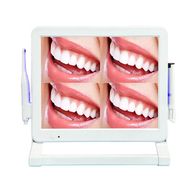
| Intraoral camera | A | An active device for viewing images, under Rule 12 |
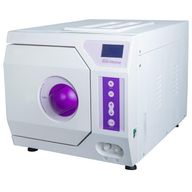
| Autoclave / steriliser | C | Rule 15: devices for sterilising medical devices |
| Dental air compressor | Usually A | Not named; your Authorised Representative confirms |
Registration has not been called up. The regulations allow unregistered devices to be sold until SAHPRA calls up their class for registration, and SAHPRA has said a phased call-up plan will be published — but as of mid-2026 it had not been, while a voluntary feasibility study and draft new regulations were still in progress. In practice a dental chair or unit enters South Africa on the strength of the importer's licence and its product list. When registration does arrive, SAHPRA's reliance guideline (SAHPGL-MD-22, 2026) lets it lean on approvals from recognised regulators — the EU, the United States, Australia, Canada, Japan and Brazil — so a device with a CE certificate will have a shorter path; China's own approval is not on that list.
The Medical Device Establishment Licence
No medical device may be imported, distributed or sold without a SAHPRA licence. An importer holds a distributor licence (a wholesaler licence covers buying locally and cannot import). One exemption matters to dental dealers: since February 2025 establishments that deal only in non-sterile, non-measuring Class A devices are exempt for three years (Notice 5855 of 2025). A dealer that imports chairs alone could rely on it, but as soon as dental units (Class B) or autoclaves (Class C) are on the list, the licence is needed.
The application, filed under guideline SAHPGL-MD-06, covers:
- the owner and the Authorised Representative — a natural person resident in South Africa who is responsible for the performance, quality, safety and compliance of every device the company handles;
- the list of devices, by class, with their GMDN codes — this is where the chairs and units you import appear;
- a Certificate of Free Sale for each Class B, C and D device, and evidence of approval elsewhere for Class C and D;
- a quality management system covering purchasing, storage, complaints, recalls and distribution.
The licence is valid for five years, renewal must be applied for at least 90 days before expiry, and an annual retention fee is due by the end of June. SAHPRA's own guidance indicates six to eight weeks to process an application. New products are added to the list by notification or amendment as the range grows.
ISO 13485 for the importer itself. SAHPRA is phasing in a requirement that the licence holder — the South African company, not only the factory — holds ISO 13485 certification from a certification body SAHPRA recognises, in its own name and at its licensed address: for renewals from 1 June 2025, for amendments and product-list notifications from 1 June 2027, and for every application from 1 April 2028. A dealer planning to grow its product list should put certification on its own calendar now.
What your factory must provide
- CE certificate and declaration of conformity — SAHPRA accepts a CE certificate as the device's approval in a recognised market.
- Certificate of Free Sale from the country of manufacture, for Class B and above.
- ISO 13485 certificate of the manufacturer, and the technical file available on request.
- Labels and instructions for use in at least English, with the manufacturer's name and business address (Regulations 22 and 23); SAHPRA issued a notice on electronic instructions for use in 2026.
- Apostille where a document needs legalising: South Africa has applied the Hague Apostille Convention since 1995 and China since November 2023, so an apostille issued in China is accepted.
One product needs a decision before you order: an autoclave is Class C, which requires evidence of approval by a recognised regulator — a CE certificate, for example — for that specific steriliser. Ask your factory whether it holds one for the model before you put an autoclave on your list.
Two approvals outside SAHPRA: ICASA and NRCS
ICASA type approval for anything with a radio. Under ICASA's Type Approval Regulations, electronic communications equipment — which includes Wi-Fi and Bluetooth — needs type approval before it is sold, unless explicitly exempted, and selling unapproved equipment is an offence. That covers a Wi-Fi intraoral camera and a touch-screen camera computer with built-in Wi-Fi. Only a South African registered entity can apply, the approval of a radio module does not automatically carry over to the finished product, and test laboratories quote roughly five to twelve weeks. A USB camera with no radio does not need it. Plan wireless products into your first order only if the approval is under way.
NRCS for general electrical equipment. The National Regulator for Compulsory Specifications requires a Letter of Authority under VC 8055 for electrical and electronic apparatus such as IT equipment — a separate PC or monitor, for example — applied for through a South African agent and taking up to 120 working days. Whether a particular item is treated as a medical device under SAHPRA or as general equipment under the NRCS is a question to settle with your Authorised Representative before the order, not at the port.
SARS, the tariff line and VAT
- Importer registration. Every importer registers with SARS Customs (through eFiling) and clears through a licensed clearing agent.
- No ITAC permit for new equipment. The International Trade Administration Commission requires an import permit for used or second-hand goods, explicitly including used medical equipment, but not for new dental equipment.
- Classification. A bare dental chair is classified under 9402.10; a chair incorporating dental appliances — the usual complete unit — falls under heading 9018 with the dental instruments. The two are treated differently, so settle each model's tariff line with your clearing agent before you price it. We do not publish duty rates; your agent builds the landed cost.
- VAT is charged at import at the standard rate of 15 percent on the customs value plus 10 percent and any duty, and a VAT-registered importer deducts it as input tax.
- No free-trade agreement with China. South Africa applies the common external tariff of the Southern African Customs Union; the framework agreement it signed with China in February 2026 is not a free-trade agreement and did not change the tariff on Chinese goods.
Note the ports of entry: the medical device regulations name the harbours and airports through which devices may be imported — Durban harbour and King Shaka airport, Cape Town harbour and airport, Port Elizabeth (Gqeberha) harbour and airport, and OR Tambo in Johannesburg. Book to one of them.
Ports and transit from Foshan
Our factory is in Foshan, an hour from the container ports of Guangzhou (Nansha) and Shenzhen. Direct services run about 22 days to Durban and 27 days to Cape Town from the last South China port of call. Durban handles most of the country's containers and feeds Johannesburg's City Deep inland terminal, which takes around 60 percent of Gauteng's port containers by rail and road.
Durban is also where the schedule risk sits. Its Pier 2 container terminal has been run since 1 January 2026 by a Transnet–ICTSI partnership investing to raise capacity, and the World Bank's port index ranked Durban the most improved port in the world in 2025 — but in 2026 ships have again waited at anchor, around a week in early October, and some carriers have skipped the port. Cape Town loses days to wind in summer. Ask your forwarder for the current waiting time when you book, and build it into any delivery date you give a practice.
A single chair or a small first order travels as LCL (shared container); a first order for resale is usually a 20 ft container, and the packing data we send with every quotation lists how many chairs and equipment combinations fit in a 20 ft and a 40 ft box. Small items — handpieces, curing lights, cameras — can go by air to OR Tambo in about a week.
Electricity: 230 V, 50 Hz and the plug
The supply is 230 V at 50 Hz, so the standard 220 V / 50 Hz version of our chairs and compressors is the right one. Sockets are the large three-pin Type M (SANS 164-1) and the slimmer Type N (SANS 164-2), which every socket-outlet point in a new installation has had to include since 2018; tell us which the practice uses and the plug goes on the proforma invoice. There has been no load-shedding since mid-May 2025 — more than 500 consecutive days by October 2026 — but most practices kept their inverter systems, and the compressor's starting current is the load that decides whether an inverter copes. Ask us for the figures for the compressor you choose.
Selling to the public sector
About one dentist in five works in the public sector, which buys through tenders. A tenderer needs a valid SAHPRA licence, so a foreign factory bids through its licensed South African partner. Tenders are scored under the Preferential Procurement Regulations 2022 — 80/20 up to R50 million and 90/10 above — with each state body setting its own "specific goals", which can include the bidder's B-BBEE level; draft regulations under the new Public Procurement Act were published for comment in 2026. Dental equipment is not on the dtic's local-content designation list.
After the sale: the Authorised Representative's obligations
The Authorised Representative reports adverse events to SAHPRA under guideline SAHPGL-MD-03 — within 48 hours of a serious public-health threat, 10 calendar days of a death or serious deterioration in health, and 30 days where a recurrence could cause one — and runs recalls and field safety corrective actions, on which SAHPRA published a draft new guideline in July 2026. In practice that means serial-number records of every unit installed, spare parts in the country and a technician who can reach the practice.
What to ask your factory for — a supplier checklist
- CE certificate and declaration of conformity for the dental units, ISO 13485 certificate of the factory, and the technical file on request — covering the exact model numbers on your proforma invoice.
- Certificate of Free Sale from China for each Class B device, apostilled if your Authorised Representative asks for it.
- Class of each device and its GMDN code, for your product list.
- Labels and instructions in English with the manufacturer's name and address, applied at the factory.
- For an autoclave: evidence of approval by a recognised regulator for that model — or leave it out of the first order.
- For Wi-Fi products: the specifications and test data your ICASA agent needs, before the order.
- Electrical specification — 220 V / 50 Hz, Type M or Type N plug — on the proforma invoice.
- Commercial invoice and packing list that match the tariff line agreed with your clearing agent; packing data per container.
- A spare-parts kit and remote technical training with the first container.
Planning the timeline
- An importer that already holds a licence: add the models to the product list, start ICASA approval for any wireless product, order, and ship — a first container is realistic within two to three months, plus whatever Durban's waiting time is that month.
- A new company: register with SARS, set up the quality system, appoint the Authorised Representative and apply for the licence — about six to eight weeks for SAHPRA after a complete file, on top of the time to prepare it — then as above.
- Before 2027–2028: arrange ISO 13485 certification of your own company, because product-list changes will require it from June 2027.
Working with VOTEN on South African orders
VOTEN Medical manufactures dental chairs, dental units, compressors and clinic equipment in Foshan, China, and supplies practices and dealers in South Africa through an authorised distributor. For a South African licence holder we issue the CE and ISO 13485 certificates for the dental units, the Certificate of Free Sale, the declaration of conformity, the technical file and English labelling against the model numbers on your order, apostilled where needed; we confirm the class and GMDN code for your product list; and we build the chairs and compressors in the 220 V / 50 Hz version with the plug your practices use.
If you are planning a first container for South Africa, send us your model list and your port and we will come back with the document pack, specifications, packing data and distributor pricing. Our South Africa page covers the market, the electrical version and the ports in more detail; the equipment range is on our dental chair and products pages.
Sources: Regulations relating to Medical Devices and IVDs (Government Gazette 40480, 2016); SAHPRA classification guideline SAHPGL-MD-04 v5; SAHPRA, medical devices; SAHPGL-MD-06 v3, establishment licence; SAHPGL-MD-07 v4, licensing questions and answers; SAHPRA, ISO 13485 as a prerequisite for a licence; Notice 5855 of 2025, Class A exemption; SAHPRA medical devices reliance guideline; ICASA Type Approval Regulations; SARS, registration as importer; ITAC, import control; ONE, South Africa service schedule (2026); Kuehne+Nagel, port updates (October 2026); SAnews, 500 days without load-shedding; HPCSA annual report 2023; Distribution of dentists in South Africa (PLOS ONE).
Talk to the factory
Specifications confirmed in writing, packing data and distributor pricing within one business day.
VOTEN in South Africa — local distributor, which voltage version to order, shipping times to Durban or Cape Town and the questions buyers there ask most.
Related
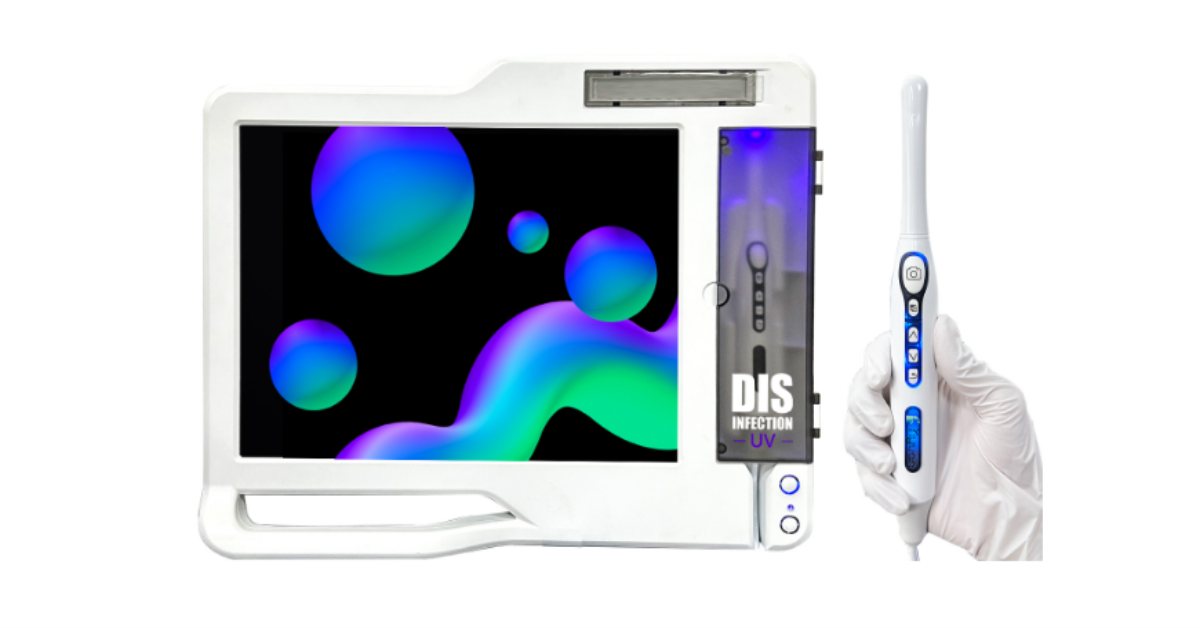
Intraoral Camera Buyer's Guide 2026: Types, the Specs That Matter, and How to Choose a Manufacturer
There is no single best intraoral camera — there is the right one for a clinic's set-up. This guide explains the four types sold in 2026, which specifications actually change the picture and which are marketing, what drives the price, how to choose a camera manufacturer in China, and which configuration to recommend to which clinic.
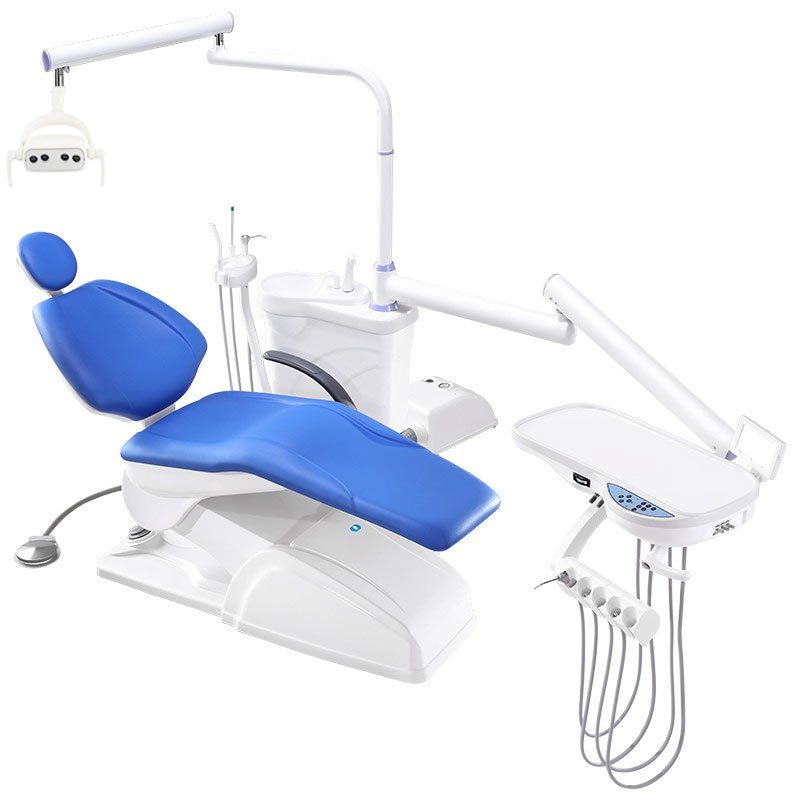
Importing Dental Equipment into Egypt: EDA, Nafeza ACID and Customs Guide
What an Egyptian dealer or scientific office needs to import dental chairs and clinic equipment: how the EDA classes dental devices and which track applies, the importer's licences, the documents your factory must provide and how they are legalised, the ACID pre-registration on Nafeza, VAT and customs, the ports and the Red Sea situation.
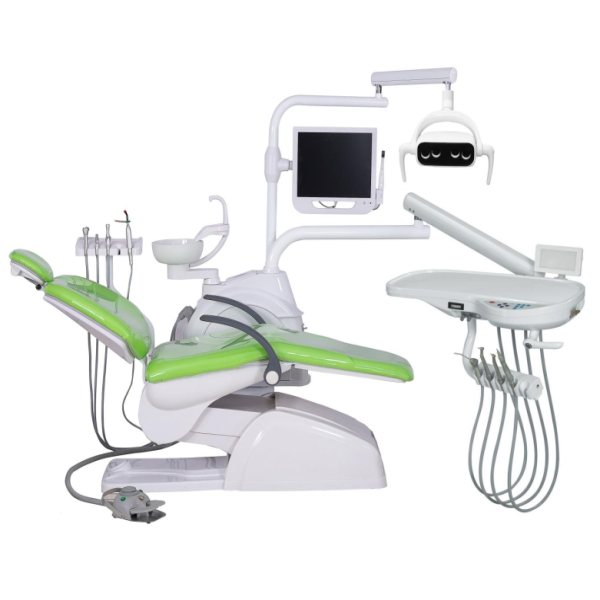
Importing Dental Equipment into Brazil: ANVISA, INMETRO and Customs Guide
What a Brazilian dealer needs to import dental chairs and clinic equipment: ANVISA notification under RDC 751/2022, the Brazilian holder with an AFE, INMETRO certification before ANVISA, the documents your factory must provide in Portuguese, Siscomex habilitation and the ANVISA import licence, the tax stack, the ports and the voltage for your state.