
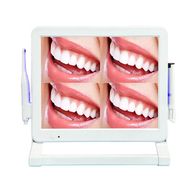
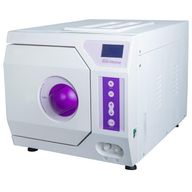
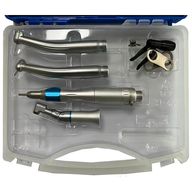
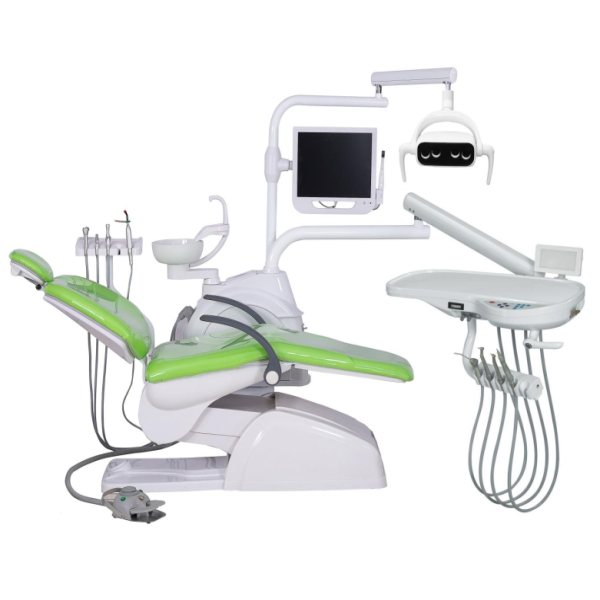
Brazil has more dentists than any other country — the federal council passed 450,000 registrations in October 2025 — and a dental industry of its own large enough to export to fifty countries. That combination makes it the most demanding market in Latin America to import into: an imported chair competes with well-known domestic brands, and it has to clear two regulators, not one, before the first unit can be sold.
This guide sets out the sequence a Brazilian dealer actually runs — INMETRO certification first, then ANVISA notification, then Siscomex and customs — and lists what to ask your overseas factory for at each step. The order matters, because each stage needs a document the previous one produced.
Regulations change. Treat this as a planning framework and confirm the current requirements with ANVISA, your certification body and your despachante aduaneiro before you commit to a shipment.
What ANVISA regulates, and how dental equipment is classified
The Agência Nacional de Vigilância Sanitária regulates medical devices under RDC 751/2022, which sorts them into four risk classes. Classes I and II go through notificação (notification); Classes III and IV through registro (registration). The difference is large:
- Notification is a documentary filing. ANVISA states that it does not carry out a technical analysis of notification petitions, processes them routinely within 30 days, and a notified product does not need revalidation — there is no expiry.
- Registration is a full technical review, valid for ten years, and requires ANVISA's own good-manufacturing-practice certificate of the factory.
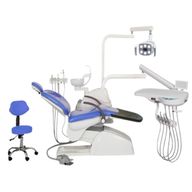
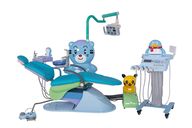
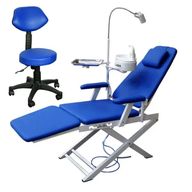
Dental equipment sits in the two lower classes. Under the classification rules in Annex I, a bare patient chair is Class I, while a delivery unit — the part with handpiece outputs, scaler and syringe — or a complete consultório odontológico is Class II, because it supplies energy to the patient. Autoclaves are also Class II. Either way the route is notification; the class only changes the fee and the form. Confirm the class of each model with your regulatory consultant before you budget, and note that nothing may be manufactured, imported or sold until the notification is published in the Diário Oficial da União.
The Brazilian holder: AFE and the responsável técnico
A foreign factory cannot hold a Brazilian regularisation. The detentor — the holder — is a company established in Brazil with an AFE (Autorização de Funcionamento de Empresa) from ANVISA for importing and distributing medical devices, plus the state or municipal sanitary licence for its premises. The AFE for medical-device activities does not need annual renewal, but it does need a named responsável técnico: a professional registered with a professional council who co-signs every petition and answers to ANVISA for the product.
This is the structural point to grasp before anything else: the dealer holds the regularisation, in the dealer's own name. It is why Brazil is a dealer-led market, and why the regularisation is an asset. A dealer that has certified and notified a model range has something a competitor cannot copy quickly, which is the usual basis for an exclusive territory. ANVISA enforces the rule in public: in July 2026 it banned the sale, import, advertising and use of an imported dental unit precisely because it was not regularised.
INMETRO comes first
What makes Brazil different from the rest of Latin America is that electro-medical and dental equipment must carry an INMETRO conformity certificate before ANVISA will accept the notification. ANVISA's RDC 549/2021 made certification compulsory for equipment under sanitary surveillance; the scheme itself is INMETRO's Portaria 384/2020 (amended by Portaria 254/2021), and the list of standards is in ANVISA's IN 283/2024, which names ABNT NBR IEC 60601-1 and 60601-1-2 for all equipment and, for dental units specifically, IEC 80601-2-60 and ISO 7494-1 and -2, with ISO 9680 for operating lights and ISO 14457 for handpieces.
How the certification works in practice:
- It is granted by an OCP (organismo de certificação de produto) established in Brazil and accredited by INMETRO; you choose the OCP, and it drives the process.
- It uses Model 5: type tests on the product plus an audit of the factory's quality and risk-management system. Tests are run in ISO/IEC 17025 laboratories; a report from a foreign laboratory is accepted if that laboratory is accredited by INMETRO or by a signatory of the mutual-recognition arrangements, which is where a factory's existing IEC 60601 test reports can save months.
- The certificate does not expire while it is maintained, but maintenance audits come round at most every 15 months.
- Only units manufactured while the certificate is valid may be imported or sold, and the INMETRO seal must be on the product before it enters the country — so the labels are applied at the factory, not in your warehouse.
Plan on five to six months for a first certification if nothing goes wrong, and start it before you do anything else. The standards list does not currently name sterilisers or compressors; whether a particular autoclave or compressor model falls within the compulsory scheme is a question for your OCP, and the answer determines its timeline.
The documents your factory must provide
For a Class I or II notification, RDC 751 asks for the petition form, the tax (TFVS), a copy of the INMETRO certificate, proof of compliance with the applicable technical regulations, and — for an imported device — a declaration by the legal manufacturer, which must be apostilled (both China and Brazil are members of the Hague Apostille Convention) and written in Portuguese, English or Spanish, or accompanied by a sworn translation. A free-sale certificate and ANVISA's own GMP certificate are required for registration (Classes III and IV), not for notification.
Two further points catch first-time importers:
- Portuguese is mandatory for the forms, the labels and the instructions for use, and RDC 751 lists what the label and the IFU must contain. The practical answer is to have the factory apply Portuguese labelling and ship a Portuguese manual, rather than relabel on arrival.
- The holder of a notification must keep an up-to-date technical dossier available to the sanitary authorities at any time. Nothing is filed, but the dossier — technical description, specifications, risk-management file, test reports, declaration of conformity — has to exist, so ask the factory for it with the first order.
An ISO 13485 certificate for the factory is not written into the notification rules, but every serious holder asks for it, and the OCP's factory audit goes faster when the quality system is already certified. Ask for it anyway, covering the manufacturing site and the product families you are importing.
Siscomex, the ANVISA import licence and customs
Three things have to be in place on the importer's side before a container can be cleared:
- Habilitação no Siscomex (still called RADAR by most people): Receita Federal's authorisation of your company to import. The Limitada modality caps imports at a value set from the company's financial capacity (currently up to US$150,000 per six-month period); Ilimitada has no cap. A new dealer usually starts on Limitada and upgrades once the business justifies it.
- ANVISA's consent for the shipment. Medical devices are subject to ANVISA's administrative control of foreign trade — now governed by RDC 977/2025 — and the consent is requested through the LPCO module of the Portal Único Siscomex. The product must already be regularised and the importer must hold an AFE; the request is made before the import declaration is registered. Brazil is replacing the old DI with the Duimp through 2026, so ask your despachante which declaration applies on the day.
- Classification. A bare dental chair falls under NCM 9402.10.00, while Brazil's tariff schedule has a specific line for chairs equipped with dental apparatus — the normal complete unit — under 9018.49.99, with its own tax treatment. Get your despachante to settle the classification of each model before you price it, because the two lines are taxed differently.
One useful rule from RDC 810/2023: units manufactured up to five years before the notification was published may still be imported, against a declaration by the holder — so stock built during the certification period is not lost.
Landed cost: what sits on top of the invoice
Brazil's import taxes stack rather than sit side by side, which is why the landed cost of an imported chair is so much higher than its FOB price. The layers are the Imposto de Importação (import duty — there is no free-trade agreement between China and Brazil or Mercosur, so the full tariff applies), IPI, PIS/COFINS-Importação, ICMS charged by the state of entry, the AFRMM levy on ocean freight, and the Siscomex usage fee, plus port, storage and brokerage charges. No Ex-tarifário reduction is in force for dental chairs or units, and ICMS treatment differs by state. We do not publish rates because they change and depend on the state and the classification; your despachante will build the stack for your port and your NCM line, and that figure — not the FOB price — is what you price the chair from.
Ports and transit from Foshan
Our factory is in Foshan, an hour from the container ports of Guangzhou (Nansha) and Shenzhen (Shekou and Yantian). Santos, the largest container port in Latin America, serves São Paulo and the Southeast and is quoted at about 30 to 33 days port to port on the main Asia–East Coast South America services, with a new direct service in 2026 advertising 26 days from Yantian. Paranaguá is 31–37 days, Navegantes / Itajaí / Itapoá 33–34 and Rio Grande about 41–42; Suape in the Northeast is about 45 days. Allow a further one to three weeks for ANVISA consent, clearance and inland transport.
A single chair or a small first order travels as LCL (shared container); a first order for resale is usually a 20 ft container, and the packing data we send with every quotation lists how many chairs and equipment combinations fit in a 20 ft and a 40 ft box. Small items — handpieces, curing lights, cameras — can go by air in about a week once they are regularised.
Electricity: 60 Hz everywhere, 127 V or 220 V depending on the state
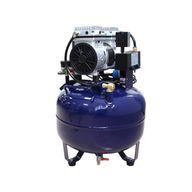
Brazil runs at 60 Hz nationwide, but the voltage depends on where the clinic is: 127 V in São Paulo, Rio de Janeiro, Minas Gerais, Paraná, Espírito Santo and Amazonas, 220 V in most of the Northeast, Brasília, Goiás, Santa Catarina and Rio Grande do Sul — with city exceptions in both directions (Salvador and Porto Alegre are 127 V; much of the São Paulo interior is 220 V). Order the chair and the compressor in the version for the city, 110 V / 60 Hz or 220 V / 60 Hz, and have it written on the proforma invoice together with the Type N plug to NBR 14136, mandatory on new appliances since 2010. A compressor motor wound for 50 Hz and connected to 60 Hz runs fast and wears early, so the frequency matters as much as the voltage.
After the sale: the holder's obligations
Regularisation does not end at publication. The holder must run a technovigilance system under RDC 67/2009 — a named professional, a written procedure, and reports to ANVISA through Notivisa within 72 hours of learning of a death or serious public-health threat, 10 days of a serious adverse event and 30 days of a technical complaint with serious potential — and must notify any field action (recall or correction) under RDC 551/2021. In practice this means keeping serial-number records of every unit installed and having spare parts and a trained technician in the country. It is also why the factory you choose matters after the first container as much as before it.
What to ask your factory for — a supplier checklist
- Manufacturer's declaration / authorisation letter in the holder's name, apostilled, naming the exact model numbers.
- ISO 13485 certificate for the site, and CE certificate with declaration of conformity for the dental units, with issuing body and expiry visible.
- IEC 60601-1 / 60601-1-2 and dental-unit (IEC 80601-2-60, ISO 7494) test reports, with the laboratory's accreditation — the OCP decides what it can reuse.
- Technical dossier per model: description, specifications, materials, risk-management file (ISO 14971), verification and validation summaries.
- Portuguese label artwork and instructions for use, to be applied at the factory, with space for the INMETRO seal and the ANVISA notification number.
- Electrical specification — 110 V or 220 V, 60 Hz, Type N plug — written on the proforma invoice.
- Commercial invoice and packing list that match the NCM classification agreed with your despachante; packing data per container.
- A spare-parts kit and remote technical training with the first container, so technovigilance has something to work with.
Planning the timeline
- Month 0: choose the model range (keep it short — every model is certified and notified separately), appoint the OCP, confirm classes and NCM lines, request the factory's document pack.
- Months 1–6: INMETRO certification — type tests, factory audit, certificate. Apostille and translate the manufacturer's declaration in parallel; prepare Portuguese labels and IFU.
- Month 6–7: file the ANVISA notification through Solicita; routine processing is within 30 days; wait for publication in the DOU.
- Month 7: order; the factory applies the INMETRO seal and Portuguese labelling; request ANVISA consent in the Portal Único; ship (about five weeks to Santos).
- Month 9: clear, deliver, install — and start the technovigilance file.
Seven to nine months from decision to first installation is realistic for a first model range with a factory that has its documents in order. The two things that stretch it are a factory with no usable test reports, and a model range too wide to certify in one pass.
Working with VOTEN on Brazilian orders
VOTEN Medical manufactures dental chairs, dental units, compressors and clinic equipment in Foshan, China, and supplies dealers and clinics in Brazil through an authorised distributor. For a Brazilian holder we issue the apostilled manufacturer's declaration, the ISO 13485 and CE certificates for the dental units, the technical dossier with the test reports behind the CE certificate and the risk-management file, and Portuguese labelling and instructions applied at the factory, all against the model numbers on your order; we support the INMETRO certification of the chosen models with the OCP you appoint, and we build the chairs and compressors in 110 V or 220 V, 60 Hz, with the Type N plug.
If you are planning a first container for Brazil, send us your model list and your state and we will come back with the document pack, specifications, packing data and distributor pricing. Our Brazil page covers the market, the voltage by state and the ports in more detail; the equipment range is on our dental chair and products pages.
Sources: ANVISA RDC 751/2022; ANVISA, Manual para regularização de equipamentos médicos; ANVISA IN 283/2024 (standards for compulsory certification); Portaria INMETRO 384/2020; Emergo by UL on INMETRO certification timelines; ANVISA RDC 977/2025 (foreign-trade control); Siscomex, DI switch-off schedule; NCM 9018.49.99 (TIPI Ex 01, dentists' chairs with dental apparatus); ANVISA RDC 67/2009 (technovigilance); ANVISA, "Anvisa proíbe cadeira odontológica sem regularização" (July 2026); CFO, 450,000 dentists (October 2025); MSC Asia–South America transit times 2025; Voltage by Brazilian state.
Talk to the factory
Specifications confirmed in writing, packing data and distributor pricing within one business day.
VOTEN in Brazil — local distributor, which voltage version to order, shipping times to Santos and the questions buyers there ask most.
Related
Intraoral Camera Buyer's Guide 2026: Types, the Specs That Matter, and How to Choose a Manufacturer
There is no single best intraoral camera — there is the right one for a clinic's set-up. This guide explains the four types sold in 2026, which specifications actually change the picture and which are marketing, what drives the price, how to choose a camera manufacturer in China, and which configuration to recommend to which clinic.
Importing Dental Equipment into Egypt: EDA, Nafeza ACID and Customs Guide
What an Egyptian dealer or scientific office needs to import dental chairs and clinic equipment: how the EDA classes dental devices and which track applies, the importer's licences, the documents your factory must provide and how they are legalised, the ACID pre-registration on Nafeza, VAT and customs, the ports and the Red Sea situation.
Importing Dental Equipment into the Philippines: FDA and Customs Guide
What a Philippine dealer or clinic needs to import dental chairs and clinic equipment: the FDA License to Operate, CMDN or CMDR registration, the documents your factory must provide, Form E under ACFTA, and the customs steps.