
Egypt graduates more dentists than any other country in Africa or the Middle East — the Dental Syndicate counts about 120,000 members, and more than 10,000 new dentists qualify every year — and almost all of the equipment they open with is imported. It is a good market to be a dealer in, and a document-heavy one to import into: three separate systems have to be satisfied, in order, before a container of chairs can leave China.
This guide sets out those three systems — the importer's own licences, the Egyptian Drug Authority's approval of the product and the shipment, and the ACID pre-registration on Nafeza — and lists exactly what to ask your overseas factory to prepare. It reflects the EDA guidelines in force from September 2025, which simplified several document rules.
Procedures change, and the EDA has moved most of them online in the last two years. Treat this as a planning framework and confirm the current requirements with your registration holder and your customs broker before you commit to a shipment.
Who regulates what
Three bodies matter. The Egyptian Drug Authority (EDA), created by Law 151 of 2019, regulates medical devices through its Central Administration for Medical Devices (CAMD) and handles everything on its MeDevice portal — since November 2025 the only channel for import approvals. The General Organization for Export and Import Control (GOEIC) keeps the Importers Register that every importing company must be on. And the Customs Authority, through the Nafeza single window, requires every shipment to be pre-registered before it sails.
How dental equipment is classified
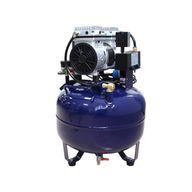
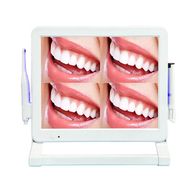
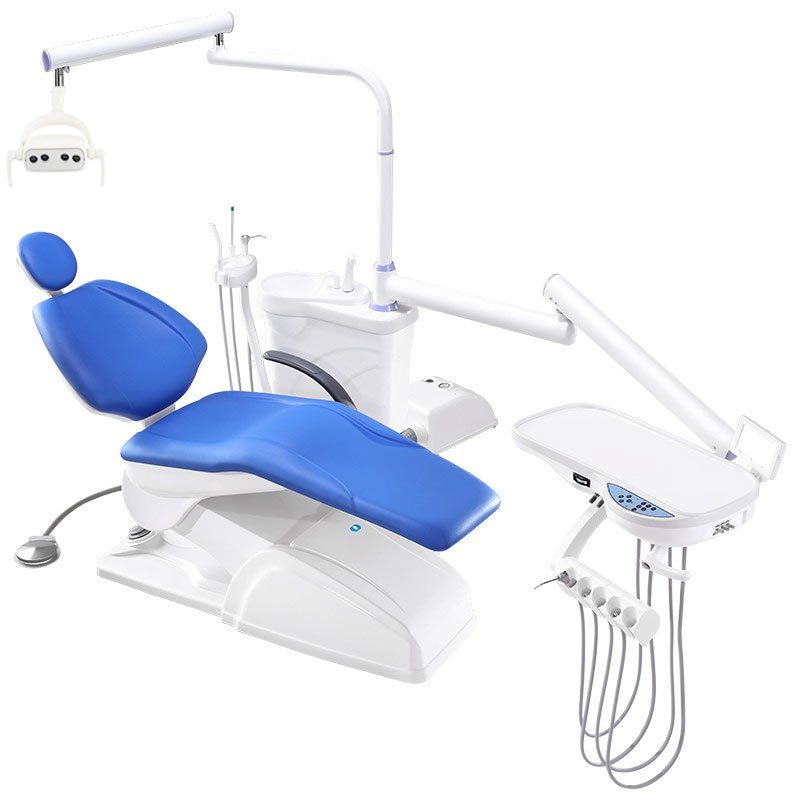
Egypt uses the European risk classes — I, IIa, IIb and III — and does not keep a scheme of its own. Under the European rules the EDA follows, a dental treatment unit is Class IIa (it supplies energy to the patient), a patient chair on its own is Class I, a dental compressor Class IIa, and an intraoral camera Class I. Your holder confirms the class of each model with the CAMD.
The second thing that shapes the file is the reference-country list. The EDA recognises 35 reference countries — the EU and EEA states, the United Kingdom, Switzerland, the United States, Canada, Australia, New Zealand and Japan — and gives devices approved there a lighter review. China is not a reference country. For Class I and IIa devices that changes little: the file is the standard one described below. Class IIb and III devices from a non-reference country go to the EDA's Scientific Committee, but ordinary dental equipment does not fall there.
The two EDA tracks: import approval and registration
The EDA runs two procedures, and a dental importer needs to know which applies to each product.
Medical equipment — import approval. Capital equipment, which is how the EDA's equipment guideline treats dental units, is handled through an import approval filed on MeDevice against a specific proforma invoice, valid for one year; a company that imports regularly can hold an annual import approval and obtain a release for each invoice within 24 working hours of completing the file. The guideline's rule is blunt: nothing may be shipped from abroad until the approval exists. The file (its Appendix 1) consists of:
- the importer's Medical Equipment Importer Register licence, with a valid maintenance-centre licence and a relationship letter from the supplier;
- the agency or distribution contract, authenticated by the Chamber of Commerce and the Egyptian Embassy in the country of origin, and a delegation letter from the manufacturer;
- the quality certificates for the device's class: for Class I and IIa, the Declaration of Conformity, a Free Sale Certificate and the CE certificate;
- the manufacturer's catalogue showing the device, its conformity and its intended use, with the accessories on the invoice matching the catalogue;
- for dental units specifically, evidence that an anti-retraction valve is fitted — from the factory catalogue, an authenticated manufacturer's letter or the manufacturer's official website.
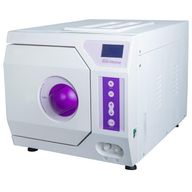
Two special rules sit in the same appendix. Sterilisation devices — autoclaves — from a non-reference country need a Free Sale Certificate from a reference country, which a Chinese factory can only provide if it holds one through a European representative; ask before you include an autoclave in a first order. And demonstration devices above Class I may not be imported by a company that has no registration licence and no maintenance centre.
Medical devices — registration. Devices and supplies that the EDA registers go through the registration guideline instead: a licence valid for ten years, re-registered in its final year, with a longer file (ISO 13485, CE certificate from a notified body, Free Sale Certificate, declaration of conformity, technical file, labels, instructions, a sample) and official response times of 20 working days for evaluation on the normal track and 7 on the fast track; consultancies quote four to ten months end to end. On this track the Free Sale Certificate for a Class IIb or III device must come from a reference country, while for Class IIa a certificate from the country of origin is accepted with a six-month grace period to supply a reference-country one.
Which track the CAMD applies to a given model is confirmed by your holder when the file is opened; dental units, compressors and cameras are normally handled as equipment. Either way the document set the factory has to produce is the same, so you can request it before the question is settled.
The Egyptian holder: importer or scientific office
A foreign manufacturer cannot file with the EDA. The applicant is an Egyptian importing company or an EDA-licensed scientific office, and whatever it obtains belongs to it: the EDA states that a registration licence belongs to its owner and that import approvals cannot be transferred. That is the basis of the agency contract, and it is why Egyptian partnerships are built around a defined model range rather than a catalogue.
An importing company needs, in this order:
- A place on the GOEIC Importers Register under Law 121 of 1982 as amended: a company in the commercial register with a tax card, an Egyptian import manager with the training certificate, the minimum paid-up capital for its legal form, and a bank guarantee; the card is valid for five years, and a new executive regulation in 2026 (Decree 271/2026) moved the process onto an electronic platform.
- Entry in the EDA's medical-device importers register, and — for equipment — a licensed maintenance centre, because the EDA will not approve equipment imports for a company that cannot service them.
- For a scientific office, the conditions of EDA Decision 315/2021: it represents a manufacturer or its approved commercial agent, its staff are Egyptian, its manager belongs to a medical-professions syndicate and its sample store is run by a full-time pharmacist.
The documents your factory must provide, and how they are legalised
Egypt is not a member of the Hague Apostille Convention, so the apostille that works for Brazil or Mexico does not work here. The agency contract, the delegation letter and the manufacturer's relationship letter are authenticated by the Chamber of Commerce in China and then by the Egyptian Embassy; signatures on delegation letters are bank-authenticated. Quality certificates issued in reference countries are exempt from legalisation only when the EDA can verify them with the issuer, which is why a CE certificate from a notified body whose register is online clears faster than one that is not.
The EDA's facilitation mechanism of September 2025 removed several frictions worth knowing about: relationship and branch letters are accepted from the issuer's verified official e-mail with the legalised copy to follow; a Free Sale Certificate no longer needs three months of remaining validity; where a certificate cannot be verified electronically, Chamber of Commerce authentication is enough without the embassy; copies uploaded to the platform replace originals; and a supporting document that expires during review does not stop the approval if it was valid when filed.
Labelling follows the EDA's minimum labelling requirements — country of origin on the packaging, and labels and instructions in Arabic or English — and the accessories listed on the invoice must match the catalogue the EDA holds. Have the factory apply the labels and ship the instructions rather than relabel in Cairo.
Before it sails: the ACID on Nafeza
Since October 2021 for sea freight — and since 1 January 2026 for air — every shipment to Egypt must be pre-registered under the Advance Cargo Information system (Customs Decision 38/2021). The sequence:
- The importer files the shipment on Nafeza with an e-signature token and receives a 19-digit ACID number.
- The exporter uploads the commercial invoice, packing list and supporting documents on CargoX at least 48 hours before departure.
- The ACID appears on the invoice, the packing list, the bill of lading and the manifest, with the HS code on the invoice.
Cargo arriving without a valid ACID is not unloaded and is returned at the exporter's cost under Customs Law 207/2020 — which is why the ACID is obtained before the container is booked, not after.
On arrival, the importer requests the EDA release on MeDevice with the stamped invoice, the import approval, the packing list and the bill of lading; requests filed before 2 pm are answered the same working day. Customs clearance for sea cargo averaged under a week in early 2025, down from more than two weeks in 2023, and the Customs Authority's stated target is two days.
Landed cost: duty, VAT and payment
Import duty is assessed ad valorem on the customs value — essentially the CIF value converted at the Central Bank rate — under the tariff line your broker confirms for each model (dental chairs and dental units sit under different headings). There is no free-trade agreement between Egypt and China, so the full tariff applies. We do not publish duty rates because they change; your broker builds the landed cost for your port and your tariff line before you fix a resale price.
Two things changed recently in the importer's favour. VAT on medical devices fell from 14 percent to 5 percent under Law 149 of 2026, in force from 29 July 2026, for machinery, equipment and medical devices used in rendering a service — dental equipment is not named in the law, so confirm the treatment of each line with your broker. And the Central Bank's 2022 rule that imports be financed by letter of credit was cancelled at the end of that year; documentary collection and ordinary bank transfer are back in use, and the exchange rate has been flexible since the March 2024 float.
Ports and transit from Foshan
Our factory is in Foshan, an hour from the container ports of Guangzhou (Nansha) and Shenzhen. Egypt has ports on both seas: Alexandria / El Dekheila, Port Said and Damietta on the Mediterranean, and Ain Sokhna on the Gulf of Suez, the closest port to Cairo at about 120 kilometres. From South China the passage is about 22 to 34 days port to port — direct services at the lower end, transhipment adding one to two weeks.
The route matters more here than elsewhere. Through 2024 and 2025 most carriers avoided the Red Sea and sailed round the Cape, which lengthened voyages to the Mediterranean ports; by September 2026 the main lines had returned to the Suez route and container transits through Bab el-Mandeb reached their highest level since the attacks began, but the risk is still rated elevated and services have been re-diverted at short notice. Ask your forwarder which routing a given service is using before you fix a delivery promise: Ain Sokhna can only be reached through the Red Sea, while Alexandria and Port Said can be served either way.
A single chair or a small first order travels as LCL (shared container); a first order for resale is usually a 20 ft container. The packing data we send with every quotation lists how many chairs and equipment combinations fit in a 20 ft and a 40 ft box. Small items — handpieces, curing lights, cameras — can go by air on the direct China–Cairo flights, with the same ACID pre-registration.
Electricity: 230 V, 50 Hz
Egypt's mains supply is 230 V at 50 Hz with Type C and F (European) sockets, so the standard 220 V / 50 Hz version of our chairs and compressors is the right one; it is stated on the proforma invoice. The load-shedding of 2023–2024 ended in September 2024, and the grid carried a record peak in August 2026 without scheduled cuts; a stabiliser or UPS on the chair's control unit remains cheap insurance against surges.
After the sale: the holder's obligations
The EDA's vigilance guideline of November 2025 makes the importer or distributor responsible for reporting serious incidents to the Medical Devices Safety Unit — within 2 days of a serious public-health threat, 10 days of a death or serious deterioration in health, 15 days of any other serious incident — for notifying field safety corrective actions, and for a periodic safety update report at least every two years for Class IIa devices. The equipment guideline adds the practical side: the maintenance-centre licence must be kept valid, spare parts must be traceable to the device they serve, and parts for a discontinued model may be imported against the manufacturer's undertaking to keep supplying them. Keep serial-number records of every unit installed from the first container.
What to ask your factory for — a supplier checklist
- Agency or distribution contract and a delegation letter in the holder's name, authenticated by the Chamber of Commerce and the Egyptian Embassy, with bank-authenticated signatures.
- Declaration of Conformity, Free Sale Certificate and CE certificate (and ISO 13485 for the registration track), covering the exact model numbers on the proforma invoice.
- Catalogue showing each model, its accessories and intended use — the invoice must match it.
- Written evidence of the anti-retraction valve in each dental unit: catalogue page, authenticated letter, or the page on the manufacturer's website.
- For an autoclave from a non-reference country, a Free Sale Certificate from a reference country — or leave it out of the first order.
- Labels and instructions in Arabic or English, with country of origin on the packaging, applied at the factory.
- Electrical specification — 220 V / 50 Hz, Type C or F plug — on the proforma invoice.
- Commercial invoice with the HS code and the ACID number; documents uploaded on CargoX at least 48 hours before departure.
- A spare-parts kit and remote technical training with the first container, so the maintenance centre can do its job.
Planning the timeline
- Before anything else: GOEIC importer card, EDA importers register, maintenance-centre licence — a new company should budget months for these, an existing importer already has them.
- Weeks 1–4: sign the agency contract; have it and the delegation letter legalised in China; collect the quality certificates and catalogue from the factory.
- Weeks 4–8: file the import approval on MeDevice against the proforma invoice; the EDA accepts or rejects the file within two working days and issues its requirements notice within three, and a complete file moves quickly — incomplete ones are suspended while you respond. Budget longer if the model goes through registration instead.
- On approval: order, obtain the ACID on Nafeza, upload documents on CargoX, ship — about four to five weeks to port.
- Arrival: EDA release on MeDevice, customs clearance, delivery and installation — allow one to two weeks.
For an importer that already holds its licences, a first container is realistic within three to four months of signing the agency contract. The two things that stretch it are legalisation — it depends on the chamber and the embassy, not on you — and a file that does not match the catalogue.
Working with VOTEN on Egyptian orders
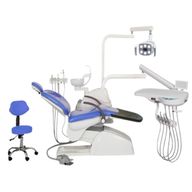
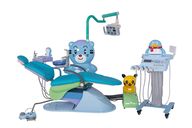
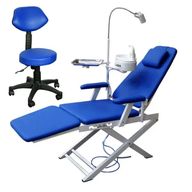
VOTEN Medical manufactures dental chairs, dental units, compressors and clinic equipment in Foshan, China, and supplies clinics and dealers in Egypt through an authorised distributor. For an Egyptian holder we issue the ISO 13485 and CE certificates for the dental units, the Free Sale Certificate, the declaration of conformity, the technical file, the catalogue and the labelling, legalised as the EDA requires, against the model numbers on your order; we document the anti-retraction valve fitted to our units; we build the chairs and compressors in the 220 V / 50 Hz version with Type C or F plugs; and as the exporter we upload the shipping documents on CargoX against your ACID.
If you are planning a first container for Egypt, send us your model list and your port and we will come back with the document pack, specifications, packing data and distributor pricing. Our Egypt page covers the market, the electrical version and the ports in more detail; the equipment range is on our dental chair and products pages.
Sources: EDA, regulatory guideline on import approvals for medical equipment and accessories (v2, 2025); EDA, guideline on registration of imported and local medical devices; EDA, facilitation mechanism for registration and import approvals (September 2025); EDA, import approvals and customs release for medical devices; EDA, medical device vigilance guideline (November 2025); EDA Decision 315/2021 on scientific offices; FIDE, classification of dental devices under the EU MDR; GOEIC importer registration guide (2025); German-Arab Chamber, ACI / Nafeza FAQ; Enterprise, Nafeza air-freight rollout (2026); Deloitte, Egypt VAT Law 149/2026; HCCH, Apostille Convention status table; Kuehne+Nagel, Red Sea container transits (October 2026); Egyptian Dental Syndicate membership and graduations (2026).
Talk to the factory
Specifications confirmed in writing, packing data and distributor pricing within one business day.
VOTEN in Egypt — local distributor, which voltage version to order, shipping times to Alexandria, Port Said or Ain Sokhna and the questions buyers there ask most.
Related
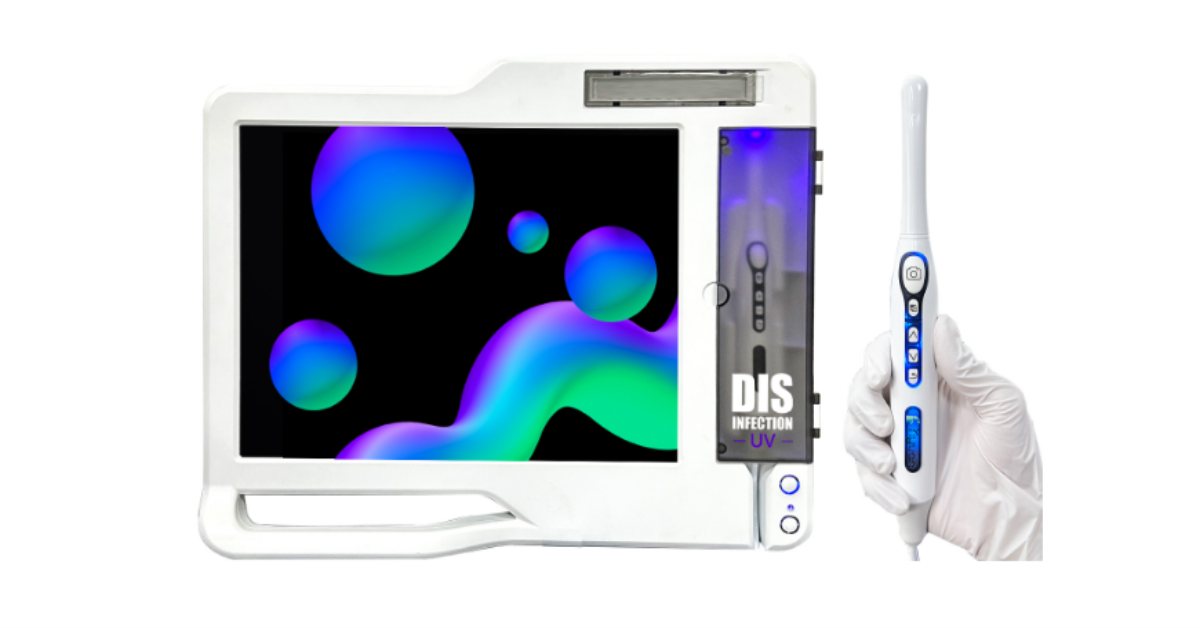
Intraoral Camera Buyer's Guide 2026: Types, the Specs That Matter, and How to Choose a Manufacturer
There is no single best intraoral camera — there is the right one for a clinic's set-up. This guide explains the four types sold in 2026, which specifications actually change the picture and which are marketing, what drives the price, how to choose a camera manufacturer in China, and which configuration to recommend to which clinic.
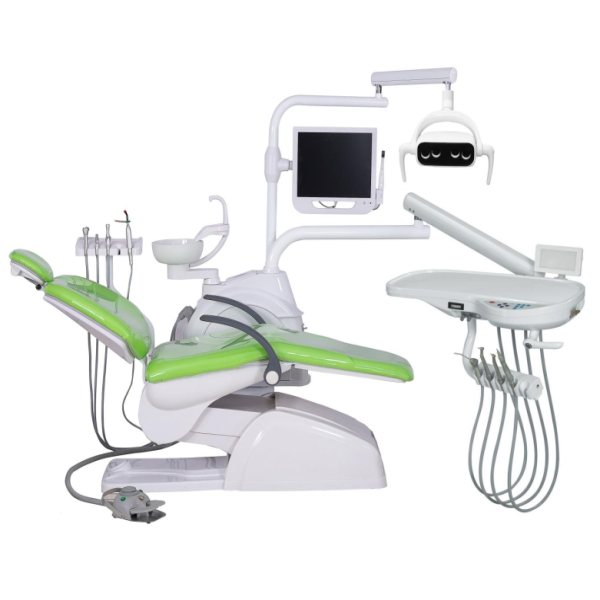
Importing Dental Equipment into Brazil: ANVISA, INMETRO and Customs Guide
What a Brazilian dealer needs to import dental chairs and clinic equipment: ANVISA notification under RDC 751/2022, the Brazilian holder with an AFE, INMETRO certification before ANVISA, the documents your factory must provide in Portuguese, Siscomex habilitation and the ANVISA import licence, the tax stack, the ports and the voltage for your state.
Importing Dental Equipment into the Philippines: FDA and Customs Guide
What a Philippine dealer or clinic needs to import dental chairs and clinic equipment: the FDA License to Operate, CMDN or CMDR registration, the documents your factory must provide, Form E under ACFTA, and the customs steps.