
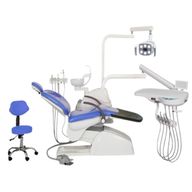
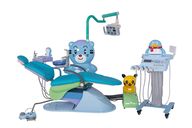
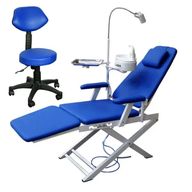
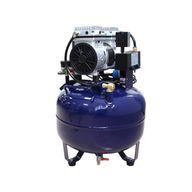
Saudi Arabia is the largest dental market in the Gulf. Ministry of Health statistics counted 33,751 dentists in 2024, about six in ten of them in the private sector, and since March 2024 at least 35 percent of dentist posts in private practices with three or more staff must be held by Saudi nationals — one reason new clinics and chain branches keep opening across Riyadh, Jeddah and the Eastern Province. Almost all of the chairs, compressors, sterilisers and cameras in them are imported.
The Kingdom is also one of the stricter markets to enter. Every medical device, including a plain dental chair, needs a marketing authorisation from the Saudi Food and Drug Authority before it can be sold, the application is filed by a licensed company inside the Kingdom, and every shipment is checked against that authorisation at the port. None of this is difficult once the order of steps is clear. This guide sets them out.
SFDA requirements are updated regularly. Treat this as a planning framework and confirm the current requirements with your Authorized Representative and your customs broker before you commit to a shipment.
The legal framework
Medical devices are governed by the Law of Medical Devices and Supplies (Royal Decree M/54 of 1442H, 2021) and its Implementing Regulation (SFDA Board decision of November 2021), administered by the SFDA. The law's basic rule (Article 8) is that no device may be circulated without registration and a marketing authorisation, and Article 15 requires a foreign manufacturer to act through an Authorized Representative in the Kingdom. The working detail is in the SFDA's numbered requirement documents:
- MDS-REQ 1 — Medical Device Marketing Authorization (MDMA), including the essential principles and labelling;
- MDS-REQ 5 — importation and customs release of shipments;
- MDS-REQ 7 — Unique Device Identification and the Saudi-DI database;
- MDS-REQ 9 — licensing of establishments (version 2.0, January 2025);
- MDS-REQ 11 — post-market surveillance and vigilance;
- MDS-G008 — classification guidance; and MDS-G28 (May 2026) on bundling several devices under one MDMA.
The older light-touch national listing for low-risk devices (MDNR) closed in 2022. Since then every class, A included, goes through an MDMA.
How the SFDA classes dental equipment
Devices are classed A (lowest risk) to D under 22 rules modelled on the international (GHTF / IMDRF) system; the highest applicable rule wins, and accessories are classed in their own right. The SFDA's classification guidance MDS-G008 names several dental items directly:
| Device | Class | Basis |
|---|---|---|
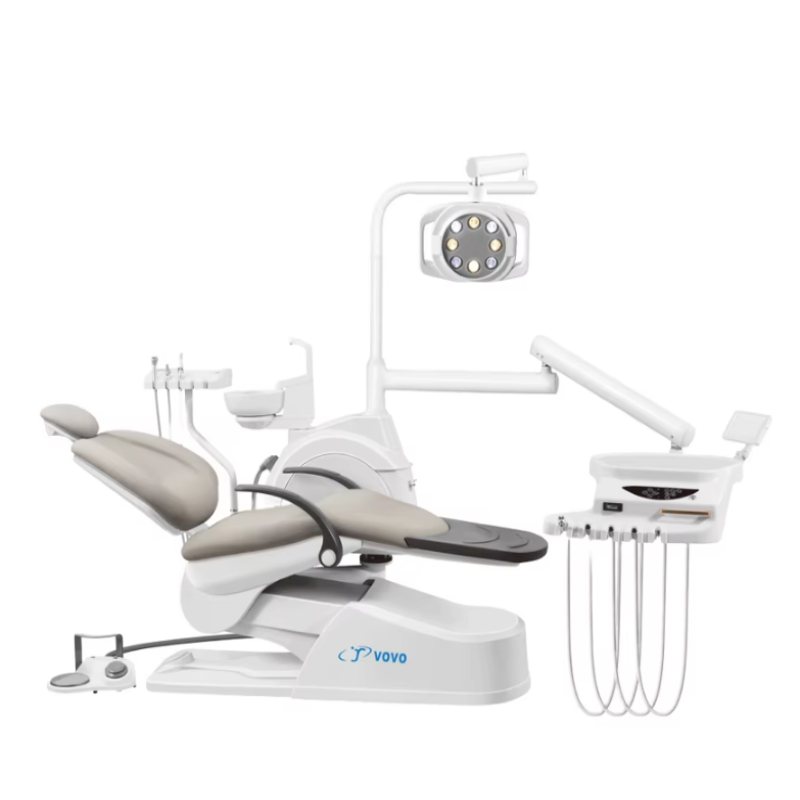
| Dental patient chair | A | Rule 1 — named as an example of external patient support |
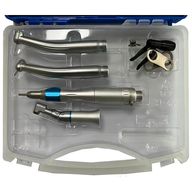
| Dental handpiece | B | Rule 9 — "dental hand pieces" named as an example |
| Dental treatment unit with handpieces and suction | Usually B | Takes the highest class of its functions (Rules 9 and 12) |
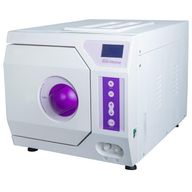
| Steam steriliser (autoclave) | B | Rule 16 — sterilisers for a medical environment |
| Dental suction unit | B | Rule 12 — suction equipment |
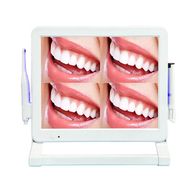
| Dental air compressor, intraoral camera | Usually A | Not named; your Authorized Representative confirms the class |
The SFDA's product classification guidance (OPS-G-002) confirms that dental units and dental compressors are regulated as medical devices. Where the class of a product is genuinely unclear, a binding decision can be requested through the SFDA's product classification service; it is valid for a year.
The Authorized Representative
A foreign factory cannot apply to the SFDA itself. It appoints an Authorized Representative (AR) — a legal entity in the Kingdom with written authorisation from the manufacturer — under MDS-REQ 9 and subject to the Commercial Agencies Law. The points a dealer should know:
- The AR holds an SFDA licence for each manufacturer it represents, and the agreement must be documented under Saudi law, listing the device types, post-market duties, term and termination.
- Only one AR may represent a manufacturer for the same class or group of devices, so the appointment is a commercial decision as much as a regulatory one.
- The AR's responsibility continues after the agreement ends until a new AR is appointed or the devices are off the market, and it confirms its details to the SFDA every year.
- Many distributors hold both the AR licence and the importer licence; others use a specialist regulatory firm as AR and import themselves.
The Medical Device Marketing Authorization (MDMA)
The AR applies for the MDMA on the SFDA's GHAD electronic system. MDS-REQ 1 sets out what goes in:
- ISO 13485:2016 certification of the manufacturer's quality system;
- for low-risk, non-sterile, non-measuring devices such as a dental chair, a reduced technical file: device description, labelling and instructions, the essential-principles checklist, evidence of compliance (test reports and standards), the risk-management file, and the post-market surveillance plan;
- for higher-class devices, the full technical file (MDS-REQ 1 Annex 3) — and the SFDA can ask for the full file for any device, with ten days to supply it.
CE marking is not a requirement in Saudi Arabia, and since 2022 there is no route that simply relies on an EU, US or other approval. A CE certificate and the test reports behind it are still the most useful evidence a file can carry, because they show compliance with the same essential principles and standards.
On timing, the SFDA's published fee schedule (2025) gives 35 working days for a Class A review; Class B files take longer, and incomplete files are returned at screening. Three to six months from starting the file to authorisation is a realistic plan for a first range. An MDMA is valid for up to three years; renewal can be filed up to 90 days before expiry, and significant changes to an authorised device must be notified within ten days. Since May 2026, guidance MDS-G28 sets out when several models or related devices can share one MDMA — worth discussing with your AR when you plan a range of chairs.
Establishment licences
Every company in the chain needs its own SFDA licence under MDS-REQ 9: the AR, the importer and distributor, and each warehouse. For a dental dealer the practical requirements are:
- Importer / distributor licence, categorised through a questionnaire on GHAD. Higher categories need an ISO 13485 certificate from a recognised certification body; lower categories can show their quality system by documentation or an SFDA inspection.
- Warehouse licence for each storage space, with a full-time technical manager (biomedical engineer or technician) and storage to the manufacturer's conditions; subletting is not allowed.
- Renewal can be applied for up to 60 days before expiry, and healthcare providers may only buy from licensed establishments (Law, Article 18) — which is also why a clinic buying a single chair normally buys through a licensed dealer.
Voltage, frequency and plug: checked at the port
This is the point most often missed. MDS-REQ 5 lists products that will not be released, and it includes electrical devices not rated for 230 V or 400 V at 60 Hz, and devices with plugs that do not comply with SASO 2203 (the British-style three-pin plug, 250 V / 13 A). Saudi Arabia adopted 230 / 400 V at 60 Hz as its national standard in 2010; the older 127 V supply is still found in some buildings and is being phased out, but 127 V or 50 Hz equipment is not what the port accepts.
- Order every powered item — chair, compressor, suction unit, steriliser, camera computer — in its 220–230 V / 60 Hz version, and check the rating plate says so. For a compressor or suction motor, 60 Hz is a property of the motor, not a setting.
- Specify the SASO 2203 (Type G) plug on the proforma invoice.
- If a clinic's building still delivers 127 V, the answer is a step-up transformer in the building, not a 127 V device.
Labelling and Saudi-DI
- Language. Devices for lay users must be labelled in Arabic and English. Dental chairs and units are professional equipment; English labelling has long been accepted for professional-use devices, but confirm with your AR whether Arabic should be added for your range.
- Content. Manufacturer's name and address, model, serial or lot number, electrical rating, and the UDI carrier; instructions for use can be supplied electronically, and simple Class A and B devices that are safe to use without them may omit them.
- No other market's restrictions. A label that says the product is intended for another country is refused at import.
- Saudi-DI. Under MDS-REQ 7 every device needs a UDI from an accredited issuing agency (GS1, HIBCC or ICCBBA), and the manufacturer or AR registers it in the SFDA's Saudi-DI database before the device is placed on the market, updating changes within ten working days. Compliance dates have passed for all classes; ask your factory for the UDI data before the order, not after.
What your factory must provide
- ISO 13485 certificate of the factory, and the CE certificate and declaration of conformity where the device has one, covering the exact model numbers.
- The technical file in the SFDA structure: device description, essential-principles checklist, test reports (electrical safety IEC 60601-1, EMC IEC 60601-1-2 and the device standards), risk management, labels and instructions, post-market plan.
- A Certificate of Free Sale from China, if your AR asks for one. Saudi Arabia has applied the Hague Apostille Convention since December 2022 and China since November 2023, so an apostille issued in China is accepted for public documents.
- UDI for each model and the data for Saudi-DI.
- For each shipment: a commercial invoice authenticated by the chamber of commerce in China, with model and serial or lot numbers on the invoice or packing list (MDS-REQ 5), the packing list and the certificate of origin.
- A shipment declaration of conformity in the SFDA format (MDS-REQ 5 Annex 8), which the AR prepares with the factory's details.
Wi-Fi products
A Wi-Fi intraoral camera or a camera computer with built-in Wi-Fi has a radio as well as a medical function. Since February 2025, conformity certification for communications and IT equipment, which the Communications, Space and Technology Commission (CST) used to issue on its own platform, has moved to SASO's SABER platform, applied for through the Saudi importer's account. Whether an SFDA-authorised medical device with a Wi-Fi module also needs that certificate is not addressed in the SFDA documents; ask your AR and a SASO-approved certification body before you put wireless products in a first order. A USB camera without a radio does not raise the question.
Customs clearance and VAT
- Importer. The importer needs a Saudi commercial registration covering the activity, the SFDA importer licence, and access to FASAH, the national trade platform. The customs declaration is filed at least 48 hours before the ship arrives; most importers use a licensed customs broker.
- SFDA release. The import permission is requested on GHAD and linked to the shipment in FASAH; the SFDA checks the MDMA, the AR and importer licences, the labelling and the shipment declaration, and can take samples. Medical devices are cleared under SFDA control rather than SASO's SABER product-safety scheme; non-medical items in the same container may be treated differently.
- No used equipment. Used and refurbished devices cannot be imported for sale.
- Tariff line and duty. A bare dental chair is classified under 9402.10, a dental unit with its instruments under 9018.49, a compressor under 8414 and a steriliser under 8419.20; the camera's line is worth settling with your broker. Duty follows the GCC common external tariff — we do not publish duty rates; your broker builds the landed cost. There is no China–GCC free-trade agreement in force.
- VAT is 15 percent. Goods on the SFDA's list of qualifying medical goods are zero-rated, including at import; anything not on the list is standard-rated. Check each item against the current list before you set a resale price.
Shipping in 2026: Jeddah is the gateway
Our factory is in Foshan, an hour from the container ports of Guangzhou (Nansha) and Shenzhen. In normal times direct services reach Jeddah or Dammam in about 16–20 days. 2026 has not been normal:
- Since the Strait of Hormuz crisis began in March 2026, most carriers have stopped or limited direct calls at Gulf ports. Maersk, for example, routes all Saudi cargo — including cargo for Riyadh and Dammam — through Jeddah and then by truck (its "Jeddah landbridge"), and in September 2026 still did not accept dry-cargo bookings to Dammam.
- That shift made Jeddah very congested in mid-2026: yard utilisation around 90 percent in July and containers waiting weeks for release. By early October Hapag-Lloyd reported the yard at about 70 percent, with some vessels still skipping calls.
- Ships from Asia reach Jeddah through the Bab el-Mandeb strait. Major carriers began returning their Asia–Europe services to the Red Sea in August and September 2026, subject to security conditions.
In practice: book to Jeddah unless your forwarder confirms a direct service to Dammam that month, allow for inland transport to Riyadh or the Eastern Province, and ask for the current release time at Jeddah before you give a clinic a delivery date. A single chair or a small first order travels as LCL (shared container); a first order for resale is usually a 20 ft container, and the packing data we send with every quotation lists how many chairs and equipment combinations fit in a 20 ft and a 40 ft box. Small items — handpieces, curing lights, cameras — can go by air to Riyadh or Jeddah in about a week.
Selling to the public sector
About four in ten Saudi dentists work for the Ministry of Health or other government bodies. Public healthcare purchasing is centralised through NUPCO, the national procurement company, and government tenders apply the Local Content and Government Procurement Authority's preference rules and mandatory list, which has been extended through 2026. A foreign factory reaches this market only through its licensed Saudi partner. Private clinics and dental chains are where most first orders for dental equipment go.
After the sale: vigilance and recalls
Under MDS-REQ 11 the manufacturer, AR, importer and distributor all report adverse events to the SFDA's NCMDR: within 2 working days for a serious public-health threat, 10 working days for an unanticipated death or serious injury, and 30 days for other reportable events. A field safety corrective action is reported within 2 days of the notice and users are informed within 5. In practice the dealer keeps serial-number records of every unit installed, spare parts in the country and a technician who can reach the clinic.
What to ask your factory for — a supplier checklist
- ISO 13485 certificate of the factory and CE certificate / declaration of conformity for the dental units, covering the exact model numbers on your proforma invoice.
- The technical file in the SFDA structure, with electrical-safety and EMC test reports, for your AR.
- Class of each device under the SFDA rules, and the UDI data for Saudi-DI.
- Labels in English (and Arabic if your AR requires it) with the UDI carrier, the 60 Hz rating and no other market's restrictions.
- Every powered item in the 220–230 V / 60 Hz version with a SASO 2203 plug — written on the proforma invoice.
- Commercial invoice authenticated by the Chinese chamber of commerce, with model and serial numbers; packing list and certificate of origin.
- For Wi-Fi products: the radio test reports a certification body needs, before the order.
- A spare-parts kit and remote technical training with the first container.
Planning the timeline
- A dealer that already holds the licences: sign the AR agreement for the new manufacturer, file the MDMA with the factory's technical file — a few months for a first range — register Saudi-DI, then order and ship, allowing for Jeddah's release time.
- A new company: commercial registration, then the SFDA establishment licences (AR, importer, warehouse), then as above.
- Before every renewal: MDMAs last up to three years and licences need renewing on their own cycle; keep both in the calendar.
Working with VOTEN on Saudi orders
VOTEN Medical manufactures dental chairs, dental units, compressors and clinic equipment in Foshan, China, and supplies clinics and dealers in Saudi Arabia through an authorised distributor. For a Saudi Authorized Representative we provide the ISO 13485 and CE certificates for the dental units, the declaration of conformity, the technical file and test reports, English labelling and the documents for each shipment against the model numbers on your order, apostilled where needed; and we build the chairs and compressors in the 220 V / 60 Hz version with the SASO 2203 plug.
If you are planning a first order for Saudi Arabia, send us your model list and your city and we will come back with the document pack, specifications, packing data and distributor pricing. Our Saudi Arabia page covers the market, the electrical version and shipping in more detail; the equipment range is on our dental chair and products pages.
Sources: Law of Medical Devices and Supplies (Royal Decree M/54); SFDA MDS-REQ 1, marketing authorization; SFDA MDS-G008, classification guidance; SFDA product classification guidance OPS-G-002; SFDA MDS-REQ 9 v2, establishment licensing; SFDA MDS-REQ 5, importation and shipment clearance; SFDA MDS-REQ 7, UDI; SFDA MDS-REQ 11, post-market surveillance; SFDA MDS-G28, bundling (2026); HCCH, Apostille Convention status table; SASO, plugs, sockets and the 230 V standard; Transition of ICT certification from CST to SABER (2025); ZATCA, import instructions; ZATCA, VAT guideline for healthcare; Maersk, Middle East operational update 49 (September 2026); Hapag-Lloyd, Middle East update (October 2026); Kuehne+Nagel, congestion at Jeddah (July 2026); Dentists by sector, 2017–2024 (MOH data via GLMM); Saudisation of dentistry (Argaam, 2024).
Talk to the factory
Specifications confirmed in writing, packing data and distributor pricing within one business day.
VOTEN in Saudi Arabia — local distributor, which voltage version to order, shipping times to Jeddah or Dammam and the questions buyers there ask most.
Related
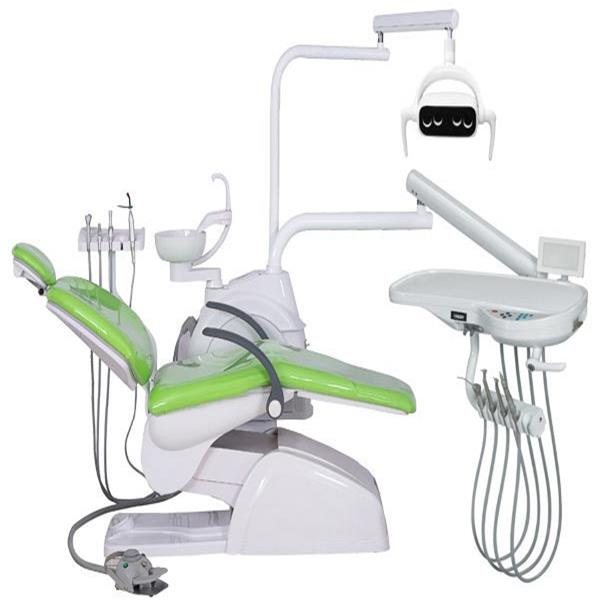
Importing Dental Equipment into the UAE: EDE Registration, Import Permits and Customs Guide
What a UAE dealer needs to import dental chairs and clinic equipment: the Emirates Drug Establishment and the 2024 law, manufacturer and product registration through a licensed marketing office or medical warehouse, the documents and embassy legalisation your factory must supply, Arabic and English instructions, import permits, TDRA approval for Wi-Fi devices, customs, VAT and shipping in the 2026 Gulf crisis.
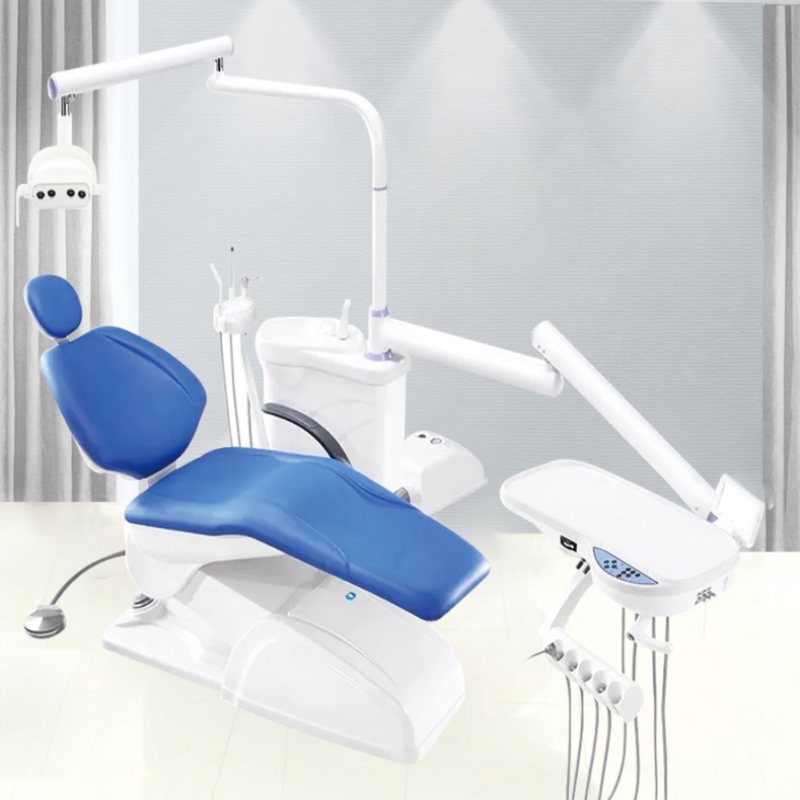
Importing Dental Equipment into South Africa: SAHPRA Licence, ICASA and Customs Guide
What a South African dealer needs to import dental chairs and clinic equipment: how SAHPRA classes dental devices, the Medical Device Establishment Licence and its ISO 13485 deadlines, what your factory must supply, ICASA approval for Wi-Fi equipment, SARS and the tariff line, the ports of entry and Durban's 2026 delays.
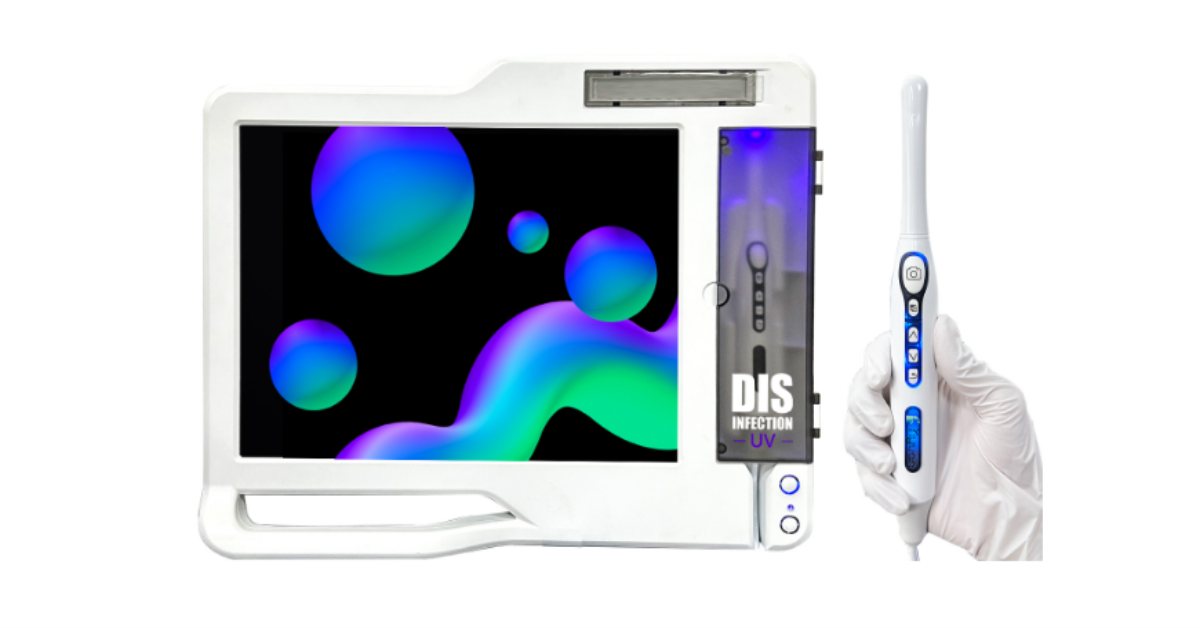
Intraoral Camera Buyer's Guide 2026: Types, the Specs That Matter, and How to Choose a Manufacturer
There is no single best intraoral camera — there is the right one for a clinic's set-up. This guide explains the four types sold in 2026, which specifications actually change the picture and which are marketing, what drives the price, how to choose a camera manufacturer in China, and which configuration to recommend to which clinic.